



Water Tanks and New Homes: What You Need to Know
When building a home in Australia — especially on a rural or bushfire-prone site — rainwater tanks are often required or strongly recommended. Whether it’s for general household use, bushfire safety compliance, or sustainability goals, water tanks are a key part of many builds.
A common question is whether the builder can organise the water tank setup, or if the owner needs to supply their own and coordinate installation separately.
Two Common Approaches: Builder-Managed vs Owner-Supplied
There are generally two ways to go about including a water tank in a new home build:
- Builder-Supplied and Installed
In this scenario, the builder includes the water tank system as part of the contract. They take care of:
- Sourcing the tank(s)
- Ensuring correct sizing and placement
- Connecting the system into the home’s plumbing
- Managing overflow and discharge
- Meeting bushfire and council requirements
All work is completed by licensed trades, coordinated by the builder.
This approach can help streamline approvals and ensure everything is installed to code, particularly when plumbing needs to be designed around the broader home layout. You can read more about how water systems align with water-efficient home design in this related guide.
- Owner-Supplied Tank, Independent Plumber
Some owners choose to buy their own tank and engage a plumber separately after the build or during the final stages.
This is a valid option, but it introduces a few extra steps:
- The owner must select the right size and type of tank for the property
- They’ll need to arrange for delivery and storage on-site
- Coordination with the plumber and builder must be carefully managed to avoid delays
- The plumber must still be fully licensed — homeowners cannot legally do plumbing work themselves in Australia
This approach may offer more control over the product or brand, but it increases the complexity of timing and responsibility.
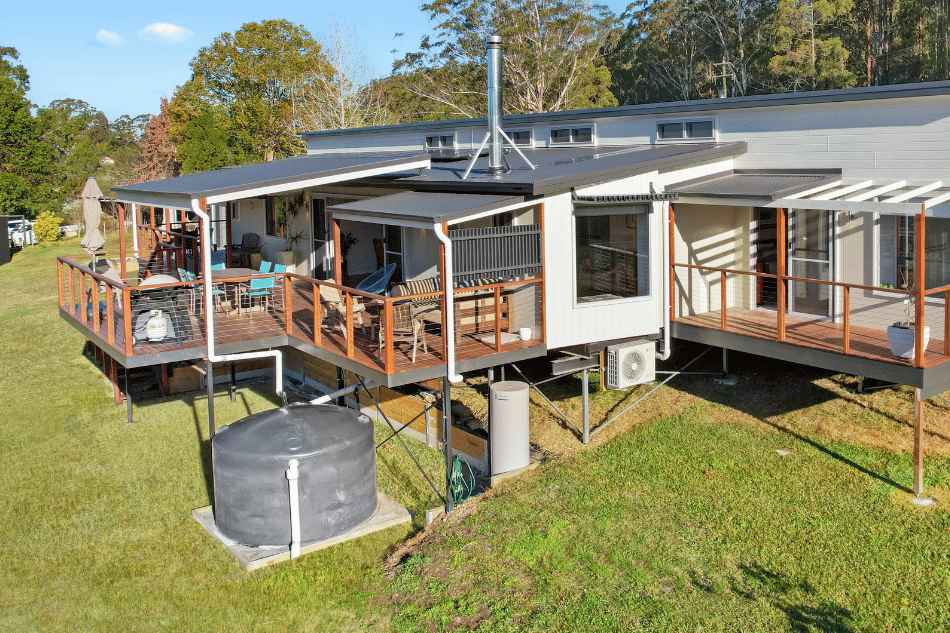
Why Plumbing Work Must Be Done by Professionals
Under Australian law, all plumbing work must be carried out by a licensed plumber. This includes:
- Connecting tanks to household plumbing
- Installing pumps and filters
- Managing overflow drainage
- Connecting fire protection systems (if required)
Unlicensed plumbing is not only illegal but can void warranties, breach building codes, and cause serious issues with insurance or compliance. Learn more about plumbing licensing via the Victorian Building Authority.
If tanks are intended for bushfire defence, your system must also comply with relevant fire safety standards — as outlined in the National Construction Code and local fire service rules.
For tank construction standards, including materials and installation, reference AS/NZS 4766.
What to Clarify Before You Build
Whether you choose a builder-managed setup or plan to handle the tank yourself, it’s important to confirm:
- Who is supplying the tank and fittings
- Who is responsible for installation and compliance
- What’s included in your contract or allowance
- How overflow will be handled (must comply with local discharge rules)
- Any bushfire compliance or council requirements involved
Getting these details clear up front can help prevent costly changes later in the process.
In Summary
Yes, a builder can arrange your water tank, and in many cases, this is the most straightforward path. But you can also take a more hands-on role if you’re prepared to manage product selection, approvals, and coordination with a licensed plumber.
Either way, the key is understanding your responsibilities and legal requirements so the system is safe, compliant, and properly integrated into your new home.