



What Is a Gutter Guard? (And Do You Really Need One in a Tree-Dense Area?)
If you’re building a new home in regional or coastal New South Wales, there’s a good chance your site is surrounded by gum trees, angophoras, paperbarks or other native species. And while these trees bring beauty, shade and a strong connection to the natural landscape, they also bring something else — leaves. Lots of them.
When those leaves settle into your gutters, they can cause all sorts of problems. That’s where gutter guards come in.
What Exactly Is a Gutter Guard?
A gutter guard is a protective system installed on or inside your home’s gutters. Its main job is to stop leaves, twigs, and debris from clogging up your guttering, while still allowing rainwater to flow through to your downpipes and away from your home.
You’ll often hear them referred to as gutter protection systems, leaf guards, or gutter mesh — and they come in a few different styles (more on that shortly).
Why Gutter Guards Matter in Tree-Dense Areas
In many of the areas where homes are being built across northern NSW — think places like Bellingen, Taree, the Northern Rivers, or even inland bushfire-prone zones — homes are surrounded by dense vegetation. It’s common to have large native trees growing within a few metres of the roofline.
These trees, while beautiful, shed leaves year-round. Eucalypts, for example, drop their leaves and bark unpredictably. When this debris lands on your roof and makes its way into your gutters, it can:
- Block water flow, causing overflow and water damage
- Increase fire risk by allowing dry material to build up near the roofline
- Attract pests like birds and rodents nesting in damp debris
- Add maintenance — especially dangerous or difficult roof cleaning
Installing a gutter guard significantly reduces these risks, giving you more peace of mind and less ladder time.
Types of Gutter Guards in Australia
Not all gutter guards are created equal. Here’s a quick guide to the most common types used in Australian homes:
1. Mesh Gutter Guards (Metal or Plastic)
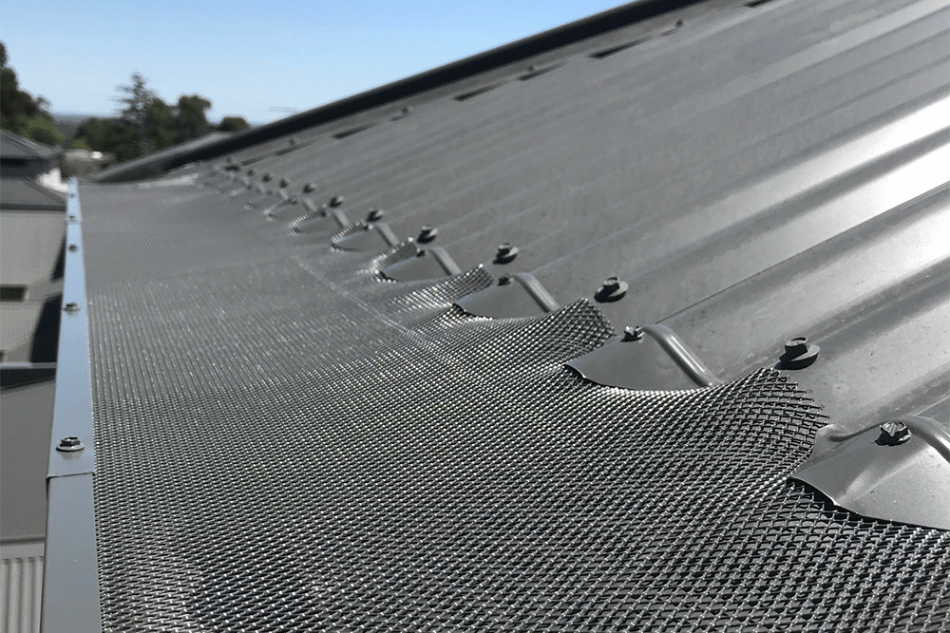
These are the most common type — a fine mesh sheet fixed over the top of your gutters. Water flows through, but leaves sit on top and eventually blow off.
Pros:
- Great for areas with small leaves and heavy debris
- Can be bushfire-compliant (metal mesh types)
- Low-maintenance once installed
Cons:
- Must be properly installed to prevent water sheeting over the edge
- Higher upfront cost than DIY options
2. Foam Inserts
These sit inside the gutter channel and allow water to seep through the foam while blocking debris.
Pros:
- Easy to install
- Inexpensive
Cons:
- Can degrade over time, especially under harsh sun
- May harbour mould or become blocked with fine particles
3. Brush Gutter Guards
These resemble a big cylindrical bottle brush placed inside the gutter. They catch larger debris while letting water through.
Pros:
- DIY-friendly
- Easy to remove and clean
Cons:
- May trap debris inside the bristles
- Not ideal for fine-leaf trees like she-oaks or certain gums
4. Surface Tension / Reverse Curve Systems
These are designed to let water flow over a curved surface into the gutter, while leaves are pushed over the edge.
Pros:
- Highly effective in theory
- Minimal clogging
Cons:
- Often expensive
- Installation can be complex and may not suit all roof types
Do Gutter Guards Work?
Yes — but the key is using the right type for your location and having them professionally installed.
In areas with dense native trees, a high-quality metal mesh guard is often the best choice. It handles fine debris, can be bushfire compliant, and blends well with modern roofing designs. It’s also ideal for homes designed to harmonise with the natural environment — like many modular homes built in rural NSW.
It’s worth noting that even with guards, some maintenance is still required. Think of them as a major time-saver, not a total set-and-forget solution. Periodic checks (especially after storms or strong winds) help ensure your gutters are flowing freely.
Bushfire Zones and BAL Ratings
If you’re building in a bushfire-prone area, your home will have a BAL (Bushfire Attack Level) rating, which influences the materials and features you can use.
Some gutter guard systems — particularly those made from fine stainless steel mesh — are designed to meet BAL-29 or BAL-40 standards. These can be an important part of your compliance strategy, as they reduce the risk of ember entry and help stop dry fuel from accumulating at the roofline.
If you’re building in a BAL-rated area, always check that your gutter guard system meets the required specifications.
Should You Install Them From the Start?
Installing gutter guards during the home build is often easier and more cost-effective than retrofitting later. It also means your home’s drainage and maintenance systems are thoughtfully designed from day one — which aligns with a smarter building journey overall.
Some builders may offer gutter guards as an optional upgrade, or you might choose to work with a local installer post-build. Either way, having a plan in place early helps avoid headaches down the track.
Final Thoughts
If you’re building a home in a leafy part of New South Wales — especially in areas where bushfires are a concern — gutter guards are worth considering. They’re not flashy, but they play a big role in protecting your home, reducing maintenance, and keeping everything running smoothly behind the scenes.
By choosing the right gutter guard system for your environment, you’re making a smart, future-focused choice — one that complements a home designed to work with the landscape, not against it.
Building stories, crafting homes — and planning for the long haul starts with the little things, like protecting your gutters from the get-go.
For more tips on building a home that suits your lifestyle and location, visit manor.net.au.