


Building a new home should feel exciting.
For most families, it starts with a picture in their mind. A better kitchen. More room for the kids. A layout that suits real life. A home that feels like it was made for them.
However, that picture is often mixed with another feeling.
A knot in the stomach.
Because building a new home can feel big, expensive and hard to control. Many people aren’t mainly excited at the start. They’re cautious. Sometimes they’re even nervous.
That doesn’t make them negative. It means they understand what’s at stake.
That’s especially true for Australian family couples who are smart about their investment in their family home. They’re not usually looking to be dazzled by slick promises. More often, they’re looking for signs that other people like them have asked the hard questions and felt good about the decision they made.
NSW guidance for home building keeps coming back to the same pressure points. It talks about clear contracts, clear inclusions, delays, checking the builder properly, and making sure the right compensation cover is in place. That tells you these fears aren’t overreactions. They’re normal concerns.
At Manor, we believe in Building Stories, Crafting Homes. Part of that is being straight with people. We don’t think fear should be brushed aside. We think it should be brought into the open and explained properly.
Because once people understand what they’re really worried about, the fear usually starts to ease.
Fear #1: “The cost is going to blow out”
This is the fear most people talk about first.
They worry the price will start in one place and finish in another. They worry about hidden extras. They worry about vague allowances. They worry about items they thought were included, but weren’t. They worry about variation after variation wearing the budget down.
That fear makes sense.
NSW says homeowners should give clear information when they ask for quotes. It also says they should be as specific as possible about products, brands, models and finishes. The aim’s simple:
more detail up front means fewer surprises later. NSW also makes it clear that quotes should include all work to be done, list all materials to be used, and reflect the owner’s specifications.
And that’s the heart of the problem.
Most people aren’t afraid of paying for a good home. They’re afraid of not knowing where the cost ends.
They’re afraid the quote will look fine until the job begins.
They’re afraid “allowances” will quietly become extra invoices.
They’re afraid site costs will turn into a black hole.
They’re afraid every decision after signing will feel like another surprise.
In other words, the real fear isn’t only cost. It’s uncertainty around cost.
That matters, because cost blowouts don’t usually happen by magic. They usually come from somewhere. Loose documentation. Unclear selections. Items left too open. Site conditions not fully understood. Changes made late. Or a process that’s too vague for the size of the decision being made.
This is one reason modular building appeals to many families.
It doesn’t mean every dollar is fixed no matter what. Site works, approvals, access, service connections and customer-led changes can still affect the final figure. Even so, when more of the design, documentation and construction is handled through a controlled and repeatable system, there’s usually less room for chaos, guesswork and rework. Homes NSW says modern methods of construction can reduce construction time, improve quality in factory-controlled settings, and give greater predictability, including reducing delays from bad weather and other unexpected events.
So yes, cost fear is real.
However, the answer isn’t to avoid building. The answer is to look for a process that reduces ambiguity. A process that helps you understand what you’re paying for, what’s included, what’s still open, and where the genuine risk points sit.
When people understand that, the fear starts to come down.
Fear #2: “This is going to drag on forever”
The second big fear is time.
People picture the build running months late. They imagine hearing one date early on, then watching that date move again and again. They worry about paying rent longer than expected. They worry about finance. They worry about school plans. They worry about life being stuck in limbo while the home drifts further away.
Again, this isn’t being dramatic. It’s a very normal concern.
NSW’s guidance on building delays says homeowners should understand the contract timeframe, check delay clauses and extension-of-time terms, and be prepared in case the move-in date slips. It also says that if the builder can’t meet the deadline, they need to ask for an extension of time. If they don’t, the owner could be owed damages or have a claim for breach of contract.
That tells you something important.
Delays aren’t a small side issue. They’re one of the central worries in residential building.
And for families, delays aren’t only a scheduling problem.
They affect cash flow.
They affect stress.
They affect work routines.
They affect childcare and schooling.
They affect relationships.
They affect how long people feel in-between homes.
That’s why time fear bites so hard. It’s not only about patience. It’s about life being held up.
This is where the method of construction can make a real difference.
YourHome says on-site construction can be slower, especially when there are weather delays. It also says modular construction completes most of the work off site in a factory environment, with less time required on site. It goes on to say prefabricated construction can be cleaner and faster, with no weather interruptions or damage, and less material wastage. Homes NSW makes a similar point about reducing delays caused by bad weather and other unexpected events.
That doesn’t mean every modular build is magically fast.
And it doesn’t mean every traditional build is slow.
What it does mean is that some systems are better than others at reducing the things that commonly blow timeframes out. Rain. Wet sites. Materials sitting exposed. Trades stepping on each other. Stop-start sequencing. Avoidable rework.
For a family trying to build a new home, that matters a lot.
Because most people aren’t asking for a miracle. They’re asking for confidence. They want to feel that the builder has a proper handle on the process, that the dates are realistic, and that the journey is moving forward instead of drifting.
Fear #3: “What if I choose the wrong builder?”
This is the deepest fear of all.
It often gets mentioned after cost and time. In many ways, though, it sits underneath both of them.
Because when people say they’re worried about budget, what they often mean is, “Can I trust the builder’s number?”
And when people say they’re worried about timeframe, what they often mean is, “Can I trust what this builder is telling me?”
So while trust comes third in this article, it’s often the first issue underneath the surface.
That’s because once people genuinely trust the builder, a lot of the fear around money and time starts to settle. The quote feels more believable. The timeframe feels more believable. The whole process feels less like stepping into the unknown.
NSW’s builder guidance tells homeowners to check a builder’s licence and insurance. It also says costs and timelines should be clearly outlined in the contract. NSW’s delays guidance also points people to licence checks and current insurance before choosing a builder or tradesperson.
That’s worth slowing down over.
People don’t really want to be sold confidence. They want to see evidence of it.
That’s where social proof matters.
When people decide whether to trust a builder, they don’t only listen to what the builder says about themselves. They look sideways. They ask around. They want to know what real customers experienced when it counted.
And fair enough.
Building a home is too big a decision for blind trust.
People want to know why others chose that builder. They want to know whether communication was good. They want to know whether problems were handled fairly. They want to know whether the final result matched what had been talked about at the start.
That isn’t being cynical. It’s being sensible.
Trust also matters because the wider construction market has been under pressure. ASIC says 14,722 companies entered external administration in 2024–25 for the first time, up 33.2% from 2023–24.
That doesn’t mean every builder is in trouble.
However, it does mean homeowners are right to be careful about who they trust.
NSW says home building compensation cover protects homeowners as a last resort if a builder can’t complete the work or fix defects because they’ve become insolvent, died, disappeared, or had their licence suspended. NSW also says a builder must provide a certificate of cover for work valued at $20,000 or more, must not ask for payment until that cover is in place, and can only ask for a maximum 10% deposit before work starts.
In other words, trust shouldn’t be based on a nice brochure, a polished website or a confident sales pitch alone.
It should be based on evidence.
A clear process.
A proper contract.
Transparent inclusions.
The right cover.
A valid licence.
Straight answers to hard questions.
And proof from customers who’ve already walked the road.
This is also where modular can help, though not in some magical way.
YourHome and Homes NSW both point to off-site and modular methods improving speed, predictability and control in the right setting. That kind of structure can support trust, because structured systems tend to create fewer surprises. And fewer surprises usually make for a calmer experience.
But even here, the key point isn’t “modular fixes everything”.
The key point is this: good systems support trust, but good people and good process are what earn it.
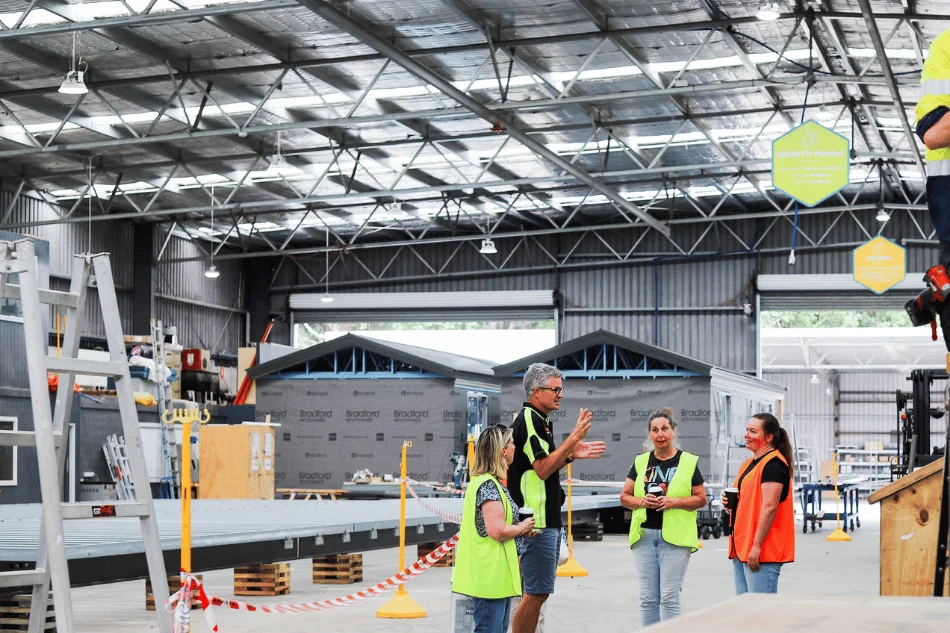
Why building a new home can feel so risky
When you strip it all back, the top three fears are really about three things:
money
time
trust
But trust sits above the other two.
Because if you don’t trust the builder, you won’t trust the quote.
And if you don’t trust the builder, you won’t trust the timeframe either.
That’s why many people spend time reading reviews, asking friends, checking testimonials and trying to work out what the experience is really like behind the scenes. They’re not being difficult. They’re trying to answer the one question that affects everything else:
Can I put my family’s future in this builder’s hands and feel okay about it?
That’s the real question.
And once that question’s answered well, a lot of the other fears start to lose their sting.
Final thoughts
If you’re thinking about building a new home, don’t feel silly for having concerns.
You should have concerns.
It’s a major financial decision. It affects your family, your daily life, your stress and your future. It deserves proper thought and proper questions.
But make sure you fear the right things.
Don’t simply fear “building”.
Fear vague quotes.
Fear muddy inclusions.
Fear poor communication.
Fear weak process.
Fear contracts you don’t understand.
Fear builders who can’t explain how they control cost, time and quality.
Fear situations where there’s no real evidence that other customers were looked after well.
Then look for the opposite.
Look for clarity.
Look for transparency.
Look for a builder who’s comfortable with hard questions.
Look for a process that makes things easier to understand, not harder.
Look for real social proof.
That’s also why Australian family couples who are smart about their investment in their family home pay close attention to what others say. They want more than a polished message. They want to know that other families have gone before them, been treated properly, and ended up feeling they made a sound decision for their future.
Look for a system that reduces unnecessary uncertainty.
Because building a new home shouldn’t feel like crossing your fingers and hoping for the best.
It should feel like moving forward carefully, clearly and with the right people beside you.
That’s a big part of what we mean at Manor when we talk about Building Stories, Crafting Homes.
Not just delivering a finished house, but helping people move through the journey with more confidence, more understanding and fewer nasty surprises.
And if modular building is part of the conversation, don’t dismiss it based on old assumptions. Current NSW and Australian guidance is clear that off-site and modular approaches can offer real benefits around speed, predictability and reduced weather disruption when they’re done well.
That won’t remove every concern.
But the right builder, the right process and the right level of honesty can go a long way towards easing the fears that matter most.