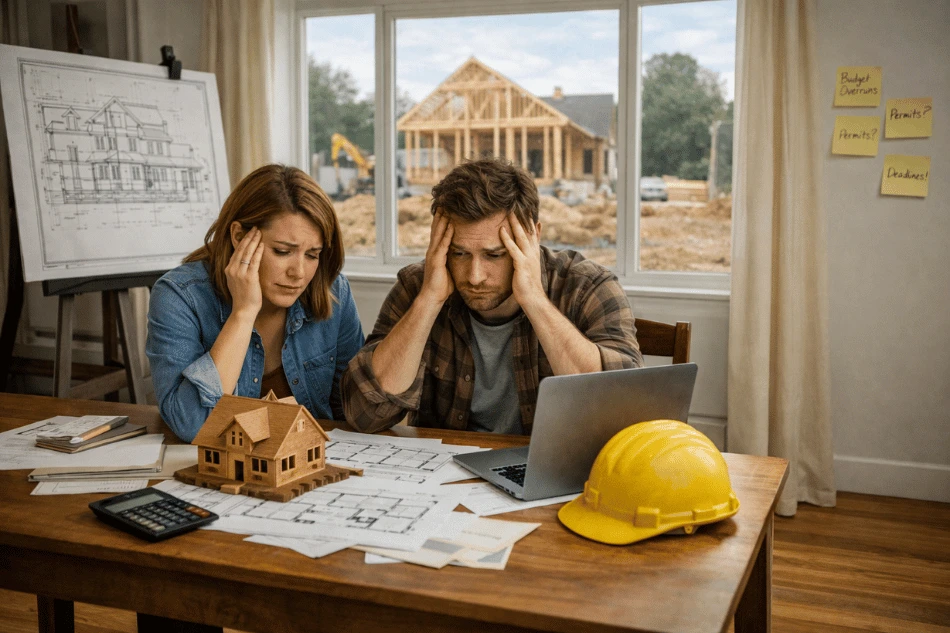



If you’re building when costs and timelines keep changing, it’s normal to feel uneasy. Many Australian families feel the same. Fuel prices move. Freight costs shift. Timelines stretch. One week things seem steady. The next week, there’s another story about delays or rising costs.
That can make building feel risky.
However, that is not the best way to think about it.
A better question is this: when the market becomes less predictable, which building method is better set up to handle it?
That’s where modular building deserves serious thought.
Not because it avoids market pressure altogether. Nothing does. Instead, modular often handles change with fewer moving parts and more control than a traditional site-built home.
When you’re making a big family decision, that matters. In fact, many Australian family couples who are smart about their investment in their family home are asking a deeper question. They are not only asking what a home will cost. They are also asking how exposed the whole journey is to delays, disruption and stress.
At Manor, we believe in Building Stories, Crafting Homes. Part of that means helping families think clearly when the market feels noisy. So here are five practical ways to think about building in uncertain times.
1. Building when costs and timelines keep changing is easier with fewer moving parts
Many people think the biggest risk is rising material prices.
Sometimes that is true. However, the bigger risk is often the number of things that must line up at the right time.
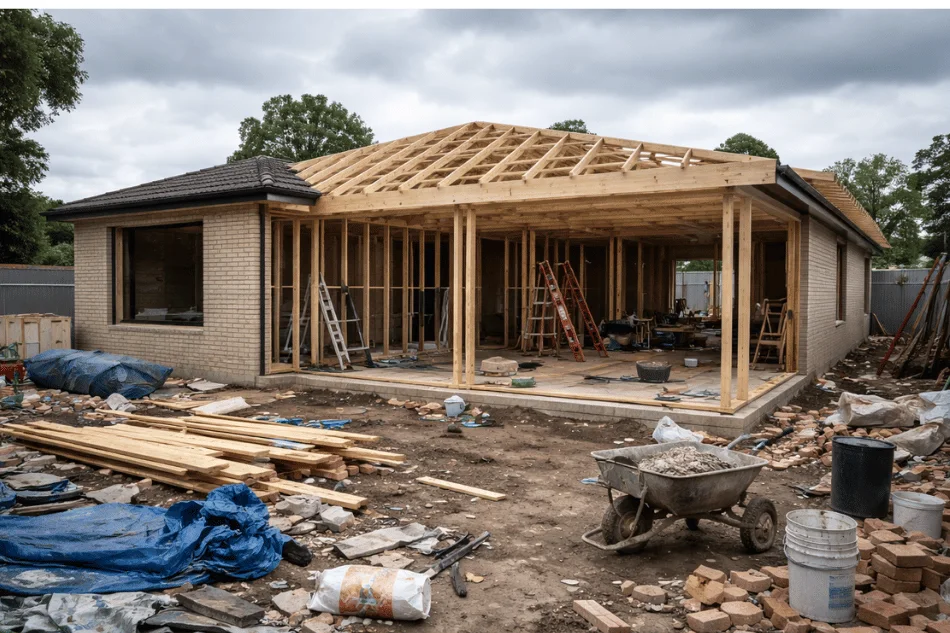
Traditional building usually depends on a long chain of site-based steps. Materials need to arrive on time. Trades need to turn up in order. Weather needs to cooperate. Access needs to work. If one part slips, the rest can slip too.
That’s where problems often begin.
When fuel prices, freight, labour availability or general market conditions shift, a build with many moving parts becomes harder to manage. Often, it is not one big problem. It is several smaller problems stacking up.
Modular building works differently.
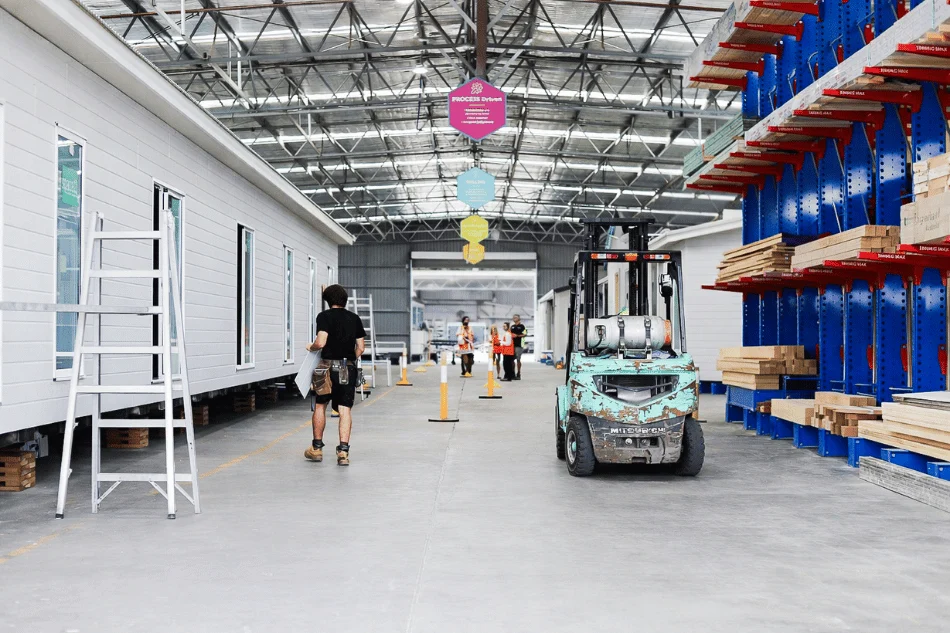
Because much of the home is built in a controlled factory, more of the process happens in one place. That usually means fewer unknowns on site. It also means fewer chances for small disruptions to become major delays.
Nothing removes uncertainty completely. Even so, a simpler process is often easier to manage. And when life is already busy, that kind of clarity matters.
2. The more you sort out early, the more certainty you usually gain
One of the hardest parts of building in a changing market is late decision-making.
That’s where many families get caught.
Selections may still be open. Pricing may still be moving. Site questions may still need answers. Materials that were available last month may now have longer lead times. Trades may need to be rebooked. A straightforward job can suddenly feel more complicated.
That sort of uncertainty creates stress.
It becomes even harder when families are also trying to plan finances, school arrangements, sale dates or temporary living arrangements.
Modular tends to reduce some of that pressure because it brings more decisions forward. Design, engineering, manufacturing and coordination often get resolved earlier and more clearly than in a conventional build.
That helps with efficiency. More importantly, it helps with peace of mind.
When more of the key decisions are locked in early, the project is usually less exposed to ongoing market changes. That does not mean rushing people. Instead, it means giving families more certainty upfront so they carry less uncertainty later.
3. Labour pressure tends to hit site-built homes harder
Another important point is this: many timeline problems have little to do with the design.
Often, the issue is availability.
Traditional building depends on a range of trades coming to site at different stages. They all need to arrive in the right order. If one trade is delayed, the next stage may also be delayed.
That is why some builds lose momentum.
Even when everyone is trying to help, the process can still slow down if too many parts depend on people, materials and timing lining up on site.
Modular changes that dynamic to a degree. It shifts more of the work into a factory environment. As a result, teams can manage labour, supervision and sequencing more closely.
That does not remove labour pressure entirely. However, it can reduce the part of the project that is vulnerable to day-to-day site disruption.
For families, the takeaway is simple. If the market is under pressure, a building method with fewer on-site variables may be better placed to stay steady.
4. Site work is often where uncertainty grows
When people picture building, they usually picture the home itself.
They think about the kitchen, bedrooms, living spaces and finishes. That makes sense. It is the exciting part. It is also the personal part.
However, many delays do not come from the design alone. They come from everything around it.
Site access can cause problems. Weather can interrupt progress. Delivery timing can shift. Trade coordination can break down. Ground conditions can raise new questions. All of that can slow the project.
That is why uncertainty often grows so quickly in a conventional build. The longer more of the project stays on site, the more chances there are for something to interrupt the flow.
Modular helps reduce that exposure.
A significant portion of the home is completed in a controlled environment before it reaches site. Of course, site preparation still matters. Approvals still matter. Installation still matters too. Even so, the actual house spends less time exposed to full site disruption.
That distinction matters.
When people hear the word uncertainty, they often think only about price. In reality, uncertainty is also about how many things can go wrong, change, or slow progress. In general, a shorter and more controlled site phase helps reduce that risk.
5. In uncertain times, certainty becomes part of the value
When families compare building options, they usually focus on price first.
That is fair. Budget matters.
However, in uncertain times, certainty has value too.
The cheapest-looking option on paper is not always the easiest option once the build begins. It is not always the safest. And it is not always the option that gives the best overall outcome when delays and stress start to build.
A building method with more structure, more predictability and fewer moving parts offers more than a product. It offers a steadier path.
That can mean fewer surprises. It can mean less waiting around. It can mean less stress on the family. It can also mean feeling that the project is moving through a more controlled system, rather than reacting to the market every week.
That is one of the biggest reasons modular stands out when costs and timelines keep changing.
Not because it promises perfection. Not because it guarantees that nothing will change. Rather, it is often better positioned to handle change without the whole process becoming messy or fragile.
That is a real benefit.
Final thoughts
If the market feels unsettled, that does not mean you should give up on building your home.
However, it does mean you should think carefully about how you build.
Instead of asking only, “What will this cost today?”, it may be wiser to ask a few better questions.
Which type of build is more exposed to delays and disruption?
Which type of process relies on more moving parts?
Which approach is more likely to give our family clarity and confidence?
Which path is better set up to handle changing conditions without throwing everything off course?
Those are smart questions.
In fact, many Australian family couples who are smart about their investment in their family home are already thinking this way. They are looking beyond the headline price. They are also thinking about certainty, timing and the quality of the journey.
That is why modular is worth serious thought.
It offers a more controlled way to build in a world that does not always feel very controlled. And when you are building a place where life will happen, that kind of certainty matters.
Because building a home is never only about putting materials together. It is about creating the setting for real life. It is about protecting the journey as well as the outcome.
At Manor, that sits close to the heart of what we mean by Building Stories, Crafting Homes.