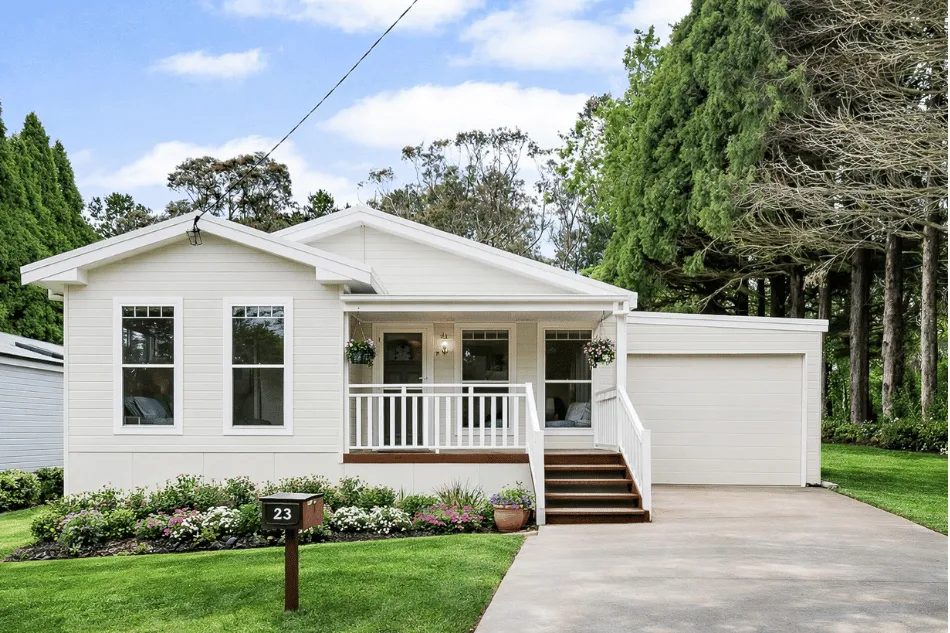



A verandah can be one of the best parts of a country, coastal or rural home.
It gives you somewhere to sit with a coffee, watch the weather roll in, keep an eye on the grandkids, or simply enjoy the outlook you bought the land for in the first place.
So, it’s understandable when people get nervous about the idea of a verandah balustrade.
They worry it’ll block the view.
They worry it’ll make the home look boxed in.
They worry it’ll take away from the clean lines of the design.
They worry it’ll make the verandah feel less open.
These are fair concerns.
However, if the fall from the verandah to the ground is high enough, a balustrade may not be optional. It may be a safety and compliance requirement.
The good news is simple. A balustrade doesn’t have to spoil the look of your home.
When it’s considered properly, it can become part of the design rather than an awkward add-on.
Handrail vs balustrade: what’s the difference?
People often use the word handrail loosely when talking about verandahs, decks and stairs.
But technically, a handrail and a balustrade aren’t the same thing.
A handrail is usually the top rail you hold onto. On some homes, especially where the verandah is low to the ground, a simple handrail may be used for styling, comfort or definition.
It might help frame the verandah. It might give the home a more finished look. It might also suit the style of the home, even where there’s no major fall risk.
A balustrade, barrier or guardrail is different.
It’s the full protective system designed to help stop someone falling from an edge. This may include a top rail, posts, vertical balusters, glass panels, cables, mesh or another approved infill.
So, when the fall from the verandah, deck or landing reaches the level where a barrier is required, a simple top handrail isn’t enough.
You generally need a full compliant balustrade.
That means the height needs to be right. The openings need to be controlled. The whole system needs to be suitable for the site and use.
In this article, when we refer to handrails in the everyday sense, we’re really talking about verandah edge protection.
Where there’s a significant fall, that usually means a full balustrade, not just a rail across the top.
When do you need a verandah balustrade?
In simple terms, if there’s a significant fall from the edge of your verandah, deck, balcony or landing, you’ll usually need a proper barrier.
Under the NCC, a balustrade or barrier is generally required where people could fall one metre or more from a floor or accessible roof. The Queensland Government’s deck and balcony safety guideline explains that where the difference in height is one metre or more, a balustrade of at least one metre in height is required.
For decks or balconies more than one metre above the ground, openings in the balustrade can’t be greater than 125 mm. This also applies to decorative balustrades. Source: Queensland Government guideline.
Where the fall is more than four metres, there are also restrictions around climbable elements. Horizontal rails or similar elements between 150 mm and 760 mm from the floor may not be allowed if they make the barrier climbable. Source: Queensland Government guideline.
For stairs, the requirements are a little different. A barrier is generally required to be at least 865 mm above the stair nosing, and stair balustrade openings also need to meet the 125 mm requirement. Source: Queensland Government guideline.
The practical takeaway is this:
If the fall is one metre or more, don’t assume you can leave the edge open.
Get it checked properly.
The exact requirements may depend on your design, site levels, approval pathway, stairs, landings and final construction details.
In NSW, verandahs, decks, balconies and patios may not always need planning approval if they meet the exempt development rules. However, the NSW Planning Portal states that works must be structurally adequate, installed to manufacturer specifications and comply with the Building Code of Australia.
So, this isn’t something to work out by opinion.
It needs to be checked early and designed properly.
Will a balustrade ruin the look of the verandah?
It can, if it’s treated as an afterthought.
But it doesn’t have to.
This is where good design matters.
A balustrade shouldn’t be something that gets tacked on at the end because someone suddenly realises it’s needed.
It should be considered as part of the home’s elevation, verandah design, site levels and overall style.
There’s an old design principle that applies well here: form follows function.
In plain English, that means the design should respond to what the home needs to do.
If your verandah sits close to ground level, an open edge may feel natural.
But if your verandah’s well above the ground, an open edge can actually look wrong. It can feel exposed, unfinished and visually unsafe.
Once there’s a real drop, the eye often expects a barrier.
A well-designed balustrade gives the verandah a proper edge. It can frame the view, finish the elevation, and make the home feel more settled on the site.
For Australian family couples who are smart about their investment in their family home, this is the right way to think about it.
The question isn’t simply, “Can we avoid a balustrade?”
The better question is, “If we need one, how do we make it look like it belongs?”
Common verandah balustrade options
There are several ways to approach a balustrade without spoiling the look of the home.
Some are light and discreet.
Others are more traditional and substantial.
Both can work, depending on the design.
1. Timber balustrades
Timber balustrades often suit traditional country homes, Federation-inspired homes, farmhouse-style homes and some Hamptons designs.
They can include heavier posts, shaped rails, vertical balusters and more decorative detailing.
Yes, timber can interrupt the view more than glass or slim metal options.
But that doesn’t automatically make it wrong.
On the right home, a strong timber balustrade can add character. It can make the verandah look more established, more grounded and more connected to the architecture.
This is especially true when the home already has traditional rooflines, larger posts, verandah brackets or classic country detailing.
Sometimes the best answer isn’t the balustrade you notice least.
Sometimes it’s the one that makes the home look more complete.
2. Glass balustrades
Glass is often chosen when the view is the main concern.
It can work well where the home looks out over water, paddocks, bushland, valleys or open countryside.
It keeps the edge safe while allowing the outlook to remain clear.
Glass usually gives a more contemporary feel. It can suit modern coastal homes, contemporary farmhouse designs and homes with simple, clean lines.
However, glass isn’t completely invisible.
It needs posts, channels or fixings. It also needs cleaning, especially in dusty, coastal or high-rainfall areas.
So, glass can be a good option, but it should still be chosen with the whole home in mind.
It needs to suit the design, not just solve the view issue.
3. Steel or aluminium balustrades
Slim steel or aluminium balustrades can be a strong middle ground.
They can be simple, durable and neat.
They can also be powder-coated to suit window frames, roof colours, posts or external trims.
For example, a dark vertical balustrade can suit a contemporary country home.
A white or light-coloured balustrade may suit a coastal or Hamptons-style home.
A simple square-profile design can feel clean without drawing too much attention.
This option often works well when you want the balustrade to be practical, long-lasting and visually tidy.
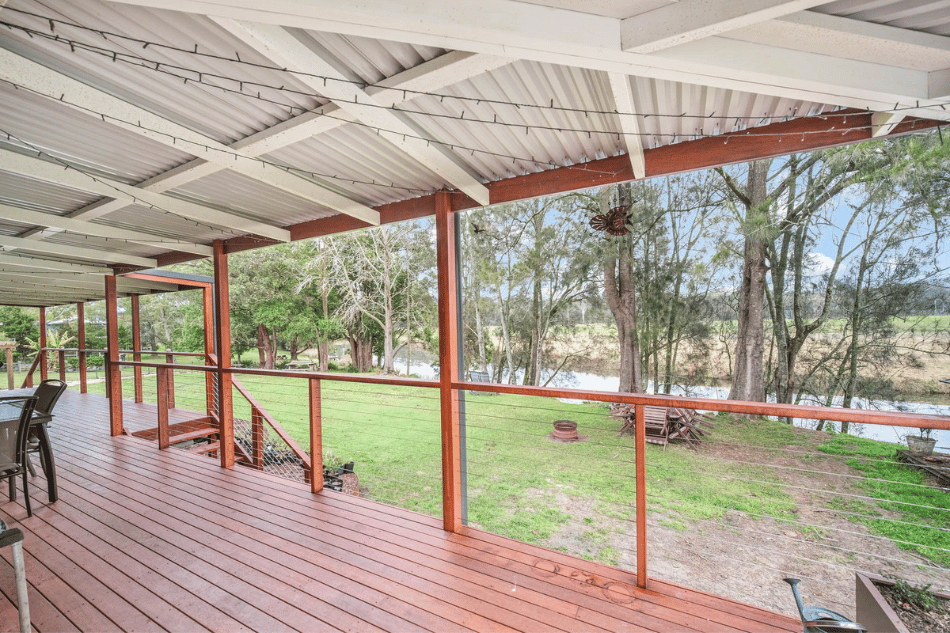
4. Wire or cable balustrades
Wire or cable balustrades can create a lighter look.
They’re often used where people want a more open rural feel.
They can reduce the sense of visual bulk and help preserve the view.
However, they need careful consideration.
Wire spacing, tensioning, fall height and climbability all matter.
Darebin Council’s handrails and balustrades guidance notes that wire balustrades need to comply with the Building Code of Australia, and that wire tension needs to be maintained over the life of the balustrade.
So, wire can look simple.
But getting it right still takes proper planning.
It’s not something to copy from a photo and hope it passes.
5. Batten-style balustrades and screens
Vertical battens can work well when you want safety, privacy and style at the same time.
They can suit contemporary country homes, modern farmhouse designs and homes where the verandah needs a stronger architectural rhythm.
A batten-style barrier can also help screen parts of the verandah from neighbours, roads or exposed areas.
In some situations, it can make the outdoor area feel more comfortable and protected.
This type of balustrade can be especially useful when the goal isn’t only to preserve a view, but to shape how the verandah feels.
6. Mixed balustrade styles
You don’t always need the same balustrade everywhere.
In some homes, the best solution is a mix.
For example, you might use glass across the main outlook, timber near the front entry, and a simpler metal balustrade on a less visible side.
This can help balance cost, view, style and maintenance.
It also reflects how people actually use a home.
The view from the main living area may matter more than the view from the laundry side of the verandah.
The front elevation may need more character, while the rear deck may need a lighter touch.
Good design makes those decisions deliberately.
Match the balustrade to the home, not just the view
A common mistake is choosing a balustrade only because it preserves the view.
That matters, but it’s not the only issue.
The balustrade also needs to suit the home.
A heavy traditional timber balustrade may look beautiful on a country-style home, but too busy on a clean contemporary design.
A frameless glass balustrade may preserve the view, but feel out of place on a more traditional farmhouse.
A black metal balustrade may look sharp on a modern country home, but too harsh on a softer coastal design.
This is why the balustrade should be considered as part of the whole home, not as a separate product.
The right question isn’t simply, “What blocks the least view?”
The better question is, “What gives us the safety we need, protects the outlook as much as possible, and still looks like it belongs on this home?”
That’s how you end up with a well-designed family home that sits in harmony with the landscape, rather than a home where safety features feel forced.
Think about the view from inside and outside
Most people think about the view from the verandah.
That’s important, but it’s only part of the picture.
You also need to think about the view from inside the home.
If you’re sitting in the living room looking out through large windows or sliding doors, where will the top rail sit in your line of sight?
Will it cut across the main view?
Will vertical balusters line up awkwardly with windows or doors?
Will the balustrade feel heavy when viewed from the kitchen, dining or lounge area?
Then think about the outside view as well.
How will the home look from the driveway?
How will the verandah edge look from the garden, paddock or lower side of the block?
Will the balustrade help the home sit better on the land?
This matters because you experience a home from more than one angle.
A good balustrade works from more than one viewpoint.
Don’t leave it too late
The worst time to think about balustrades is after the verandah height, site levels and design decisions are already locked in.
By then, the options may be more limited.
It’s much better to consider the issue early, especially if the home is being built on a sloping block or raised above natural ground level.
This is common on rural, regional and lifestyle properties.
People often buy land because of the view. But that same view can come with site levels that create fall risks.
That doesn’t mean the verandah design is ruined.
It just means the edge treatment needs to be planned properly.
Early planning helps with compliance, cost control, material selection, view lines, verandah proportions, stair design and the overall look of the home.
It also helps avoid disappointment later.
That’s where a clear process matters. The earlier the site levels and design intent are understood, the easier it is to make good decisions before they become expensive changes.
Common mistakes to avoid
If you’re worried about balustrades, the main thing is to avoid rushed decisions.
Here are some common mistakes.
Choosing the cheapest compliant option without thinking about how it looks.
Choosing glass only for the view, without thinking about cleaning and maintenance.
Choosing wire balustrade without checking spacing, tensioning and compliance.
Adding bulky rails that cut across the main view from the living room.
Mixing styles that don’t suit the home.
Forgetting that stairs and landings may need their own compliant handrails or barriers.
Leaving balustrade selection until late in the design process.
Using furniture, planter boxes or built-in seating near the edge in ways that may affect safety.
The Queensland Government guideline also warns against placing climbable objects near a balustrade, especially where children may access the deck or balcony.
Most of these issues can be avoided with early, practical thinking.
So, will a balustrade spoil your verandah?
Not if it’s designed properly.
If your verandah is low to the ground, you may not need a full barrier. You may still choose a handrail or low edge treatment for style.
But if your verandah’s high enough to create a fall risk, then a balustrade is usually part of building the home properly.
That’s not a design failure.
It’s part of responding to the site.
When there’s a meaningful drop from the verandah to the ground, a balustrade often looks right because it’s right.
It gives the verandah a finished edge.
It makes the space safer for family and visitors.
It helps the home feel settled and complete.
The goal isn’t to pretend the safety requirement isn’t there.
The goal is to make it belong.
For home buyers who are smart about their investment in their family home, that’s the better way to think about it.
A well-designed balustrade can protect the people using the home, respect the view, and support the overall style of the building.
That’s the balance worth aiming for.