

Why So Many People Ask: “Can I Really Build There?”
Flood-prone land. It’s one of those things that gets a raised eyebrow every time. The moment people hear it, the questions start:
“Can I build here?”
“Isn’t it risky?”
“How can a house survive if a flood comes through?”
It’s a fair concern. Flooding isn’t something any family wants to deal with—and certainly not inside their home. But here’s the truth: yes, you can build on flood-prone land in Australia. It’s not just possible; it’s often practical and perfectly safe, when it’s done right.
There’s a system to it. There are rules, checks, approvals, and technical requirements that protect you and your future home. This blog breaks that down, without the jargon, so you can understand what’s actually involved—and how thousands of Aussies are already making smart housing decisions, even on flood-affected blocks.
First Up: What Do Councils Mean by “Flood-Prone”?
When land is marked as flood-prone, it doesn’t mean it’s under water every time it rains. What it does mean is that it could flood in certain circumstances, based on historical data and flood modelling.
Councils typically work off what’s called a Defined Flood Event (DFE). That could be a 1-in-100-year flood, or a 1-in-20 or 1-in-500. It’s all about probability—how likely a major flood is to occur in any given year. A 1-in-100-year flood doesn’t happen only once a century; it just means there’s a 1% chance of that size of flood happening in any given year.
If your land sits in a zone likely to be affected during those types of events, it’ll be flagged as flood-prone. That triggers a set of requirements before you can build, based on state government flood planning guidelines.
The AHD: Your New Best Friend
AHD stands for Australian Height Datum. It’s the national standard for measuring elevation—basically, a way to work out how high your land is above sea level.
When councils approve housing on flood-prone land, they’ll set a minimum AHD level for the finished floor of your home. That number is key.
Let’s say your council says your floor needs to be at least 5.3 metres AHD. That’s not a guess. It’s based on flood modelling, plus a buffer (known as “freeboard”) to account for safety. The idea is that even if a major flood comes through, the important parts of your home—like bedrooms, kitchen and living areas—stay high and dry.
Here’s how it works in real life:
- You hire a licensed surveyor
- They measure your block and mark a peg on the site at the required AHD level
- A licensed surveyor sets a peg on your block at a known AHD level, such as 4.8 metres.
- The builder then measures up from that peg to reach the required finished floor level—for example, 900 mm higher to meet a 5.7 metre AHD.
What Can You Build?
So now to the big question: if the land floods, what kind of home can you actually build?
The answer depends on your local council and flood conditions, but generally:
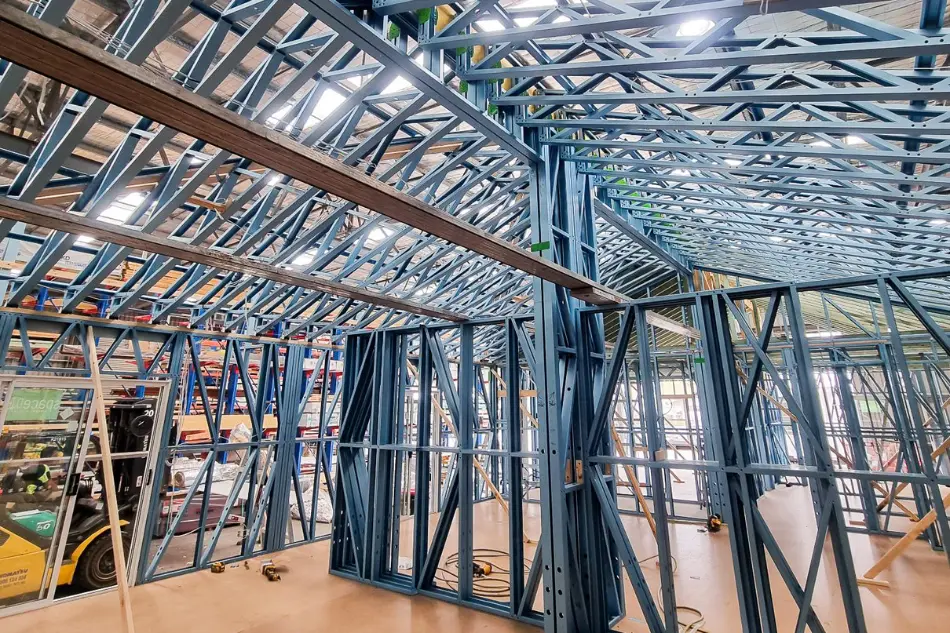
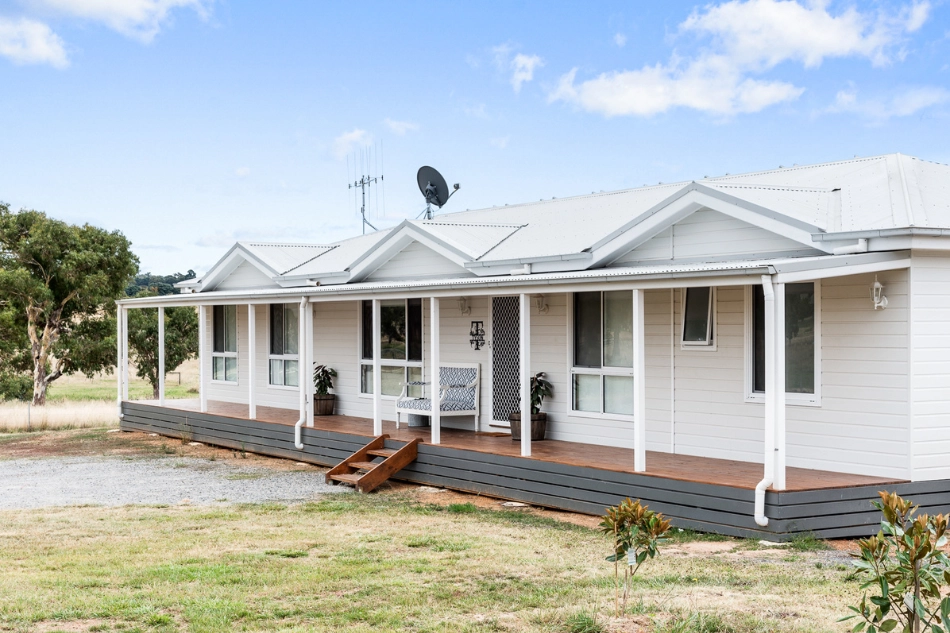
- Modular homes are a strong choice for flood-prone sites. Elevated by design and flexible in layout, they can be positioned to meet floor-level requirements without complicated foundation work.
- Piers or stumps are often used to raise the home above ground. Your builder or engineer will make sure the footing system handles potential water flow, erosion, and pressure during a flood event.
- Non-habitable spaces like garages or storage areas may sit below the floor level, but they’ll need flood vents to let water flow through without damaging the structure.
- Materials matter. Anything below the flood level must be flood-resistant—think treated timber, steel, concrete, and closed-cell insulation. Not carpet or MDF.
Your builder and engineer will work together to create a design that’s not just compliant, but practical and comfortable for everyday living.
Many Australian family couples who are smart about their investment in their family home based on both style and value are already taking this path—especially when modular housing gives them more design flexibility and quicker construction on challenging sites.
Steps to Make It Happen
Building on flood-prone land is absolutely doable—but it’s not a “she’ll be right” type of job. You’ve got to tick every box, in the right order.
Here’s how the process usually unfolds:
- Understand Your Land
Start by getting a flood certificate or local mapping. Councils or water authorities can tell you the flood level for your block. Some areas have more detailed flood modelling than others, like Queensland’s Flood Hazard Mapping.
- Set Your Benchmark
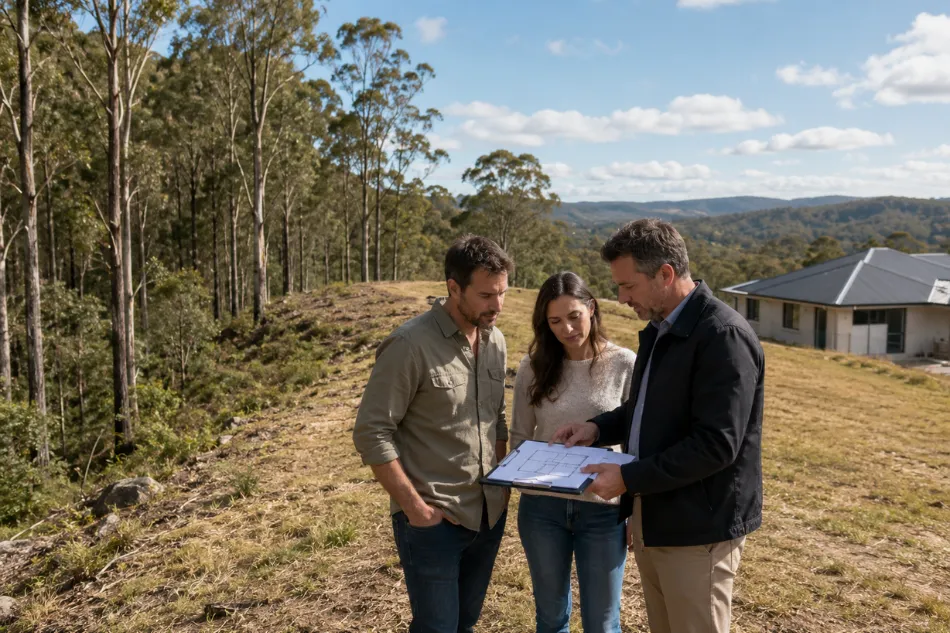
Bring in a surveyor to place a peg on your land that matches the required AHD level. This peg is your reference point for everything that follows.
- Design to Suit
Your builder or designer creates a layout that sits above the required flood level. That might mean raising the home or adjusting the underfloor structure. Some smart families choose modular housing here—it’s faster to install and can be set at custom heights from day one.
- Engineer for Safety
A structural engineer will design the footings, tie-downs, and materials needed to make sure the house stands strong—even if floodwater rushes through. The Australian Building Codes Board has detailed standards for this.
- Council Approval
You’ll need to submit plans that clearly show your home meets all flood and building code requirements. This includes elevation drawings and structural details.
- Build It Right
When construction starts, your builder will stick to the approved floor level, check the AHD peg during works, and ensure the right materials are used in the lower areas.
- Get Certified
After completion, the final inspection confirms everything’s been built as per approval. That includes flood resilience features and floor height.
What People Often Get Wrong
This is where things can go off track—if people rush in without the right info or experience:
- Ignoring freeboard: Just building to the flood level isn’t enough. Councils usually require an extra 300 to 600 mm above that. That buffer matters.
- Poor subfloor planning: If your enclosed subfloor doesn’t have the right flood vents, pressure can build and damage the structure.
- Underestimating soil conditions: Floodwaters saturate the ground. If your footings aren’t designed for that, movement or instability can follow.
- Losing track of the AHD peg: This happens more often than you’d think. Once the peg is in, don’t move it, knock it, or bury it under fill. It’s your measuring stick for everything.

Why It’s Worth the Effort
Flood-prone land isn’t always the leftover blocks no one wants. In many cases, it’s exactly the opposite—coastal, riverfront, or rural land that’s highly sought-after for its natural beauty and lifestyle appeal. These areas are often tightly held, and when they do come up, they’re snapped up quickly despite the building challenges.
With the right planning and a builder who knows the process, you can create a home that not only stands up to flood conditions but also makes the most of its surroundings. Many smart homeowners turn to modular housing in these locations, thanks to its flexibility and ease of elevation. In some regions, where wind exposure is a factor, these homes are also engineered to meet high structural standards—including those suitable for cyclone-prone zones.
And in doing so, you’re not just building safely—you’re building in places people dream of living, without compromising on style or comfort.
When It’s Not the Right Move
There are situations where building on flood-prone land doesn’t make sense. These include:
- Sites where the required floor height is so high that building becomes impractical
- Land that regularly floods (not just in extreme events)
- Locations with limited or no safe access during floods
- Areas where councils won’t approve any residential building, no matter the design
In those cases, it’s better to keep looking or consider alternative blocks that suit your needs.
What This Means for You
If you’re sitting on a block that’s flood-prone, don’t assume it’s a lost cause. The process is clear, the rules are there to protect you, and with the right team behind you, it’s entirely possible to build the home you’ve envisioned.
This is especially true for families looking for flexible, smart options like modular homes. They’re easier to adapt to flood-level requirements, quicker to build, and often designed with resilience in mind.
So, if flood risk is part of your land story, don’t panic—just plan well, build smart, and choose a team that gets it. Because building stories and crafting homes doesn’t stop just because the ground gets a little wet now and then.
Keen to learn more about building homes that suit the Australian landscape—flood-prone or not? Visit Manor Homes for more practical guidance and real-life solutions from a team that knows how to build with care, precision, and no surprises.