


Demolition for Modular Homes: What Really Happens Before You Build
So—you’ve made the decision to knock down your old home and build new with a modular design. Now you’re wondering: how does the demolition part work? If that’s where you’re at, this blog is for you. Here’s what to expect, step by step.
Meet Peter and Emily: A New Chapter on the Central Coast
Peter and Emily Walker are a couple in their 60s, living on the beautiful Central Coast. Their home, built back in the 1920s, has stood the test of time—but only just. With outdated fittings, draughty rooms, and a layout that no longer works for them, the Walkers know it’s time for a change.
They don’t want to move. The block’s perfect. Close to the beach, close to town, and full of family memories. So instead of relocating, they decide to knock down the old place and build a new modular home that better fits their needs.
Here’s how they make it happen.
Step 1: Starting with the Right People
One of the first things the Walkers do is find a modular-home builder they trust—one that understands how to work with the land, listens to what they want, and offers a streamlined, predictable process.
A good builder will always help you take care of more than just the new home itself. In Peter and Emily’s case, their builder introduces them to a local demolition contractor with experience, proper licensing, and a good reputation in the community.
That contractor becomes their go-to for handling the demo side of things. From permits to removal, the heavy lifting is in good hands.
Step 2: Getting Council Approval
Before the old place comes down, you’ll need council approval—usually through a Development Application (DA) or a Complying Development Certificate (CDC).
While the official timeline is 40 to 60 days, in reality, approvals can take months depending on your local council. Some, like Georges River Council, average over 280 days. That’s why working with a builder or demolition expert who knows the system is key.
They’ll help prep your documents properly, lodge the application, and follow up to avoid unnecessary delays—so you can get started on your new modular home sooner. Learn more about council approvals in NSW.
Step 3: Checking for Asbestos
This step is vital—and not just for older homes like the Walkers’. Any home built before the late 1980s has a good chance of containing asbestos, and it can be found in walls, ceilings, eaves, roofing, and more.
Before demolition starts, the contractor organises a full asbestos assessment:
- Certified inspectors test building materials on site.
- If asbestos is found, it’s removed by licensed specialists.
- A clearance certificate is issued to confirm the site is safe.
This is one of those non-negotiables. If asbestos is present, it has to be dealt with properly. The safety of the family and the demolition crew comes first. You can read more about asbestos and safe demolition practices at SafeWork NSW.

Step 4: Doing a Risk Assessment
Demolition isn’t just about knocking a structure down. It’s about doing it safely and smartly. That means a thorough risk assessment is done before anything starts.
For Peter and Emily’s place, the demolition team checks:
- The stability of the structure.
- Nearby buildings and trees.
- Utility lines (power, gas, water) that need to be disconnected.
- Soil conditions, especially important near the coast.
- Erosion risks and how to manage run-off.
They also plan for waste disposal, dust control, and site security. Fencing is installed, signs go up, and the whole process is designed to minimise disruption.
Step 5: Demolition Day(s)
Once all the prep work is complete, the actual demolition begins.
Depending on the size and condition of the home, the process might take a couple of days to a week. Sometimes longer if the site’s tricky or materials are being salvaged.
The Walkers’ place is taken down in stages:
- Soft strip-out – things like carpets, cabinetry, appliances, and fittings are removed first.
- Structural demolition – heavy machinery takes care of walls, roof, and footings.
- Site clearing – rubble is removed, metal is sorted for recycling, and the ground is levelled.
What’s left? A clean, flat site—ready for the new home to take shape.
Step 6: Prepping for the Modular Home
Now it’s time to get ready for the future.
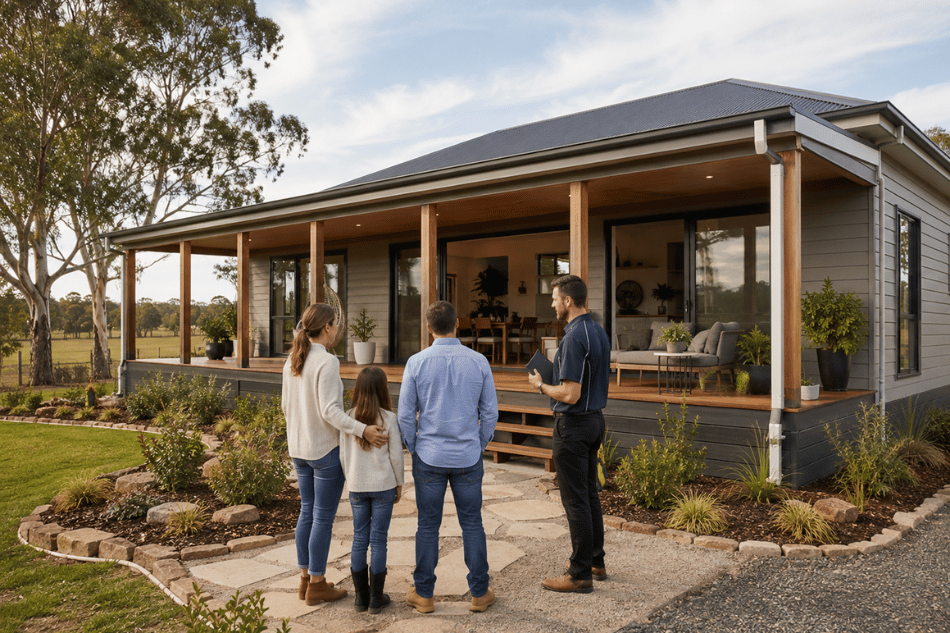
With the site cleared, Peter and Emily’s modular home can be delivered and installed quickly. That’s one of the biggest perks of modular construction: while the demolition was happening, their home was already being built in a factory.
Now all that’s needed is:
- Final site works (like footings or piers).
- Delivery of the modules.
- On-site connection and finishing touches.
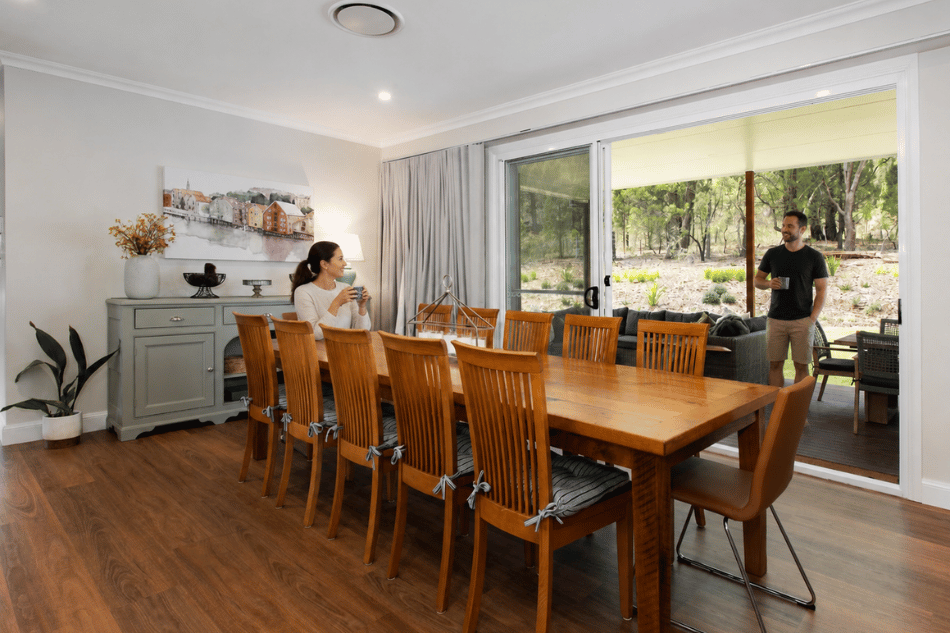
In a matter of weeks, the Walkers go from empty block to brand new home—modern, efficient, and built to suit their lifestyle for the decades ahead.
Why Modular Makes Sense After Demolition
Peter and Emily’s story is becoming more common across Australia. Families want to stay where they are but live better. And when you pair a thoughtful demolition with a well-planned modular home, you get:
- Speed – faster build times with minimal disruption.
- Clarity – a step-by-step process that’s easy to follow.
- Sustainability – recycling old materials, reducing waste.
- Confidence – a proven method, delivered by professionals.
Most of all, you get a home that works for you—not the other way around.
Thinking About a Knockdown Rebuild?
If you’re looking to stay on your land but upgrade your home, a knockdown rebuild with a modular design could be the smartest move you make.
Whether it’s for lifestyle reasons, future-proofing, or just making better use of a great location, understanding how demolition works takes the mystery out of it—and gives you a clear pathway forward.
Manor Homes is here to help Australians design and build quality modular homes that suit the land, the climate, and your way of living. We’ve built a process that’s proven, predictable, and designed to make you feel supported from start to finish.
For more info on how demolition and modular homes come together, visit Manor Homes.