

Australia is a land of contrasts—stunning beaches, rugged outback, and, unfortunately, bushfires. If you’re thinking of building a home, especially in regional or bush-adjacent areas, you’ve probably heard the term Bushfire Attack Level (BAL) rating. But what does it actually mean? And more importantly, how does it affect your home design, materials, and even the land you choose?
Many people assume a bushfire is just a once-in-a-while event that might happen far from them. But the reality is, bushfire risk is embedded into the very fabric of where we live. The Australian government has strict regulations to make sure homes in bushfire-prone areas are built to withstand the threat. If you’re buying land or planning a build, understanding BAL ratings isn’t optional—it’s essential.
What is a BAL Rating?
A BAL rating measures how much exposure a home is likely to have to bushfire hazards—things like ember attack, radiant heat, and even direct flames. It’s not just a number on a page; it determines everything from what materials your home needs to be built with to whether you can even construct on a particular block of land.
BAL ratings are determined based on:
- Vegetation Type – How much fuel (trees, shrubs, grass) surrounds your home?
- Distance to Vegetation – How close is your property to flammable vegetation?
- Slope of the Land – Fire spreads faster uphill, so steep slopes can increase risk.
- Fire Danger Index (FDI) – A measure of local weather and fire conditions.
Based on these factors, your property will be assigned one of six BAL ratings, according to Australian Standard AS 3959:2018 – Construction of buildings in bushfire-prone areas.
The Six BAL Ratings & What They Mean for Your Home
- BAL–LOW: No significant risk—no extra building requirements.
- BAL–12.5: Low risk—small chance of ember attack. Basic fire-resistant measures needed.
- BAL–19: Moderate risk—higher chance of ember attack and heat exposure. Materials must be stronger.
- BAL–29: High risk—greater ember attack and radiant heat. Construction starts becoming more stringent.
- BAL–40: Very high risk—flame exposure is possible. More fire-resistant materials are required.
- BAL–FZ (Flame Zone): Extreme risk—direct exposure to flames. Special construction methods and materials are mandatory.
Why BAL Ratings Matter for Your Build
If your land has a BAL rating above BAL–LOW, you’re legally required to build according to AS 3959:2018, which means using specific materials and techniques to make your home more resistant to bushfire.
What This Means for Your Home Design
Depending on your BAL rating, your home may need:
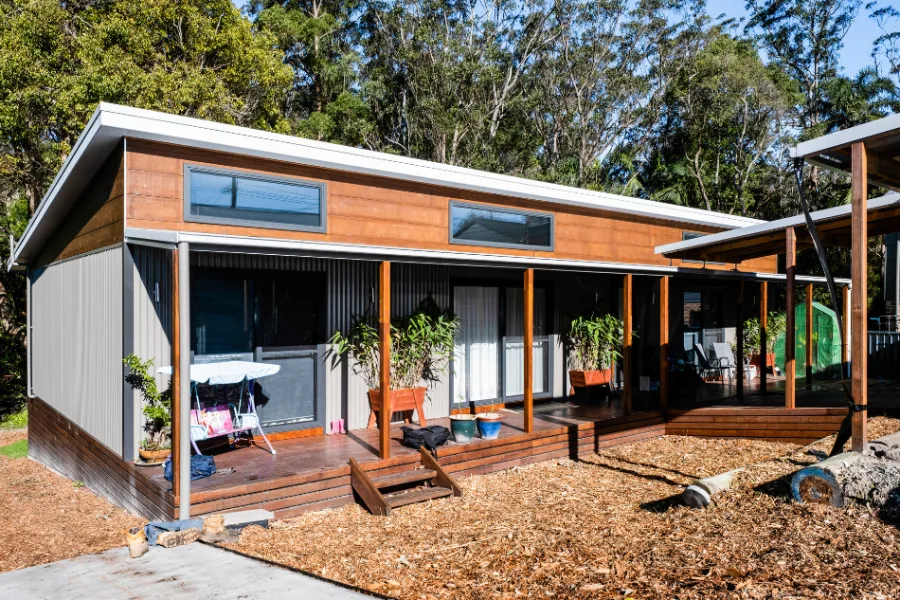
- Fire-resistant cladding – Some materials, like untreated timber, aren’t allowed in high-BAL areas.
- Toughened glass windows – To withstand heat stress and prevent breakage.
- Non-combustible roofing – To stop embers from sneaking in and igniting your home.
- Metal screens on vents and openings – To keep embers from getting inside.
- Fire-resistant decking materials – Traditional wooden decks might not be allowed in high-risk zones.
These aren’t just safety precautions—they’re legally required in bushfire-prone areas. Ignoring them isn’t an option, and failing to comply could put your home, family, and investment at serious risk.
Many Australian family couples who are smart about their investment in their family home based on both style and value make BAL compliance a priority early in the planning stage. They work with builders who understand both the design appeal and regulatory requirements, ensuring their homes are as beautiful as they are bushfire-resilient.

How Do You Find Out Your BAL Rating?
Before you commit to a block of land or start planning your dream home, a BAL assessment is essential. This assessment is done by a qualified professional, who will evaluate:
- The type and proximity of vegetation around your property.
- The slope of the land and how it affects fire behaviour.
- Local climate conditions that impact fire risk.
This assessment determines your BAL rating and tells you exactly what construction measures you’ll need to follow.
Pro tip: If you’re buying land, check the BAL rating before you buy. It could significantly impact the cost of building on that site. A seemingly perfect block might come with hidden costs due to bushfire compliance requirements.
Working with a Bushfire Consultant
In some cases, a builder may identify that your BAL rating could be higher than expected or that local council overlays require a full bushfire assessment before approval.
When this happens, your builder will work closely with a bushfire consultant—a specialist who conducts in-depth site analysis and prepares official reports. While this does involve an additional cost, your builder will help coordinate the process, ensuring everything is handled efficiently and keeping it as simple as possible for you.
This expert assessment can clarify requirements and, in some cases, even suggest ways to slightly adjust your home’s positioning or landscaping to achieve a lower BAL rating and reduce construction costs.
Building to BAL Standards: Why Your Builder Matters
Not every builder is well-versed in BAL ratings and bushfire-resistant construction. The Australian Standards are complex, and non-compliance isn’t just dangerous—it can lead to costly rebuilds or even insurance issues down the track.
A Good Builder Will:
- Understand and apply the latest AS 3959:2018 standards.
- Use the right fire-resistant materials from the start, avoiding costly changes later.
- Design your home with bushfire resilience in mind—without compromising aesthetics.
- Ensure all approvals and compliance requirements are met, so you don’t run into legal or insurance problems.
When choosing a builder, don’t just ask about pricing—ask about their experience with BAL-rated builds. A quality builder will factor in bushfire compliance seamlessly, ensuring your home is both beautiful and bushfire-ready.
Why Compliance Matters (It’s More Than Just a Box to Tick)
Complying with BAL construction standards isn’t just about following the rules. It’s about:
- Protecting your family. A well-built home could be the difference between survival and devastation in a bushfire.
- Safeguarding your investment. A home that doesn’t meet bushfire standards could be difficult to insure, sell, or even legally occupy.
- Avoiding future headaches. Retrofitting a non-compliant home is expensive and complicated—getting it right from the start is far easier.
It’s no surprise that Australian family couples who are smart about their investment in their family home based on both style and value choose to work with experienced builders who understand the ins and outs of BAL compliance. By doing so, they ensure their homes are built to stand the test of time—and the elements—without compromising on beauty or functionality.
Final Thoughts: Build Smart, Stay Safe
Choosing where and how to build your home is one of the biggest decisions you’ll ever make. If you’re considering a block in a bushfire-prone area, understanding BAL ratings will help you make informed, smart choices—before you buy, before you build, and before fire season hits.
Work with a builder who understands the regulations inside and out. A home that’s safe, stylish, and built to last? Now that’s a home worth investing in.
Looking for more expert guidance on BAL ratings and bushfire-ready home designs? Start your journey with confidence.