

Can I Get a Modular Home That Will Withstand a Cyclone? A Straight Answer for Cyclone-Zone Buyers.
If you’re building a new home in northern Australia, one question matters more than most: Can I get a modular home that’s designed to withstand a cyclone?
The answer is simple: yes—if it’s engineered to cyclone standards.
But there’s more to it than just saying “cyclone-rated.” You need to know what that actually means, what to ask your builder, and how to be sure the home you’re buying meets the right codes for your location.
This article gives you the facts—clear, practical, and specific to new home buyers in cyclone-prone areas.
Why Cyclone Standards Matter—and Where They Apply
In parts of Australia—and parts of northern NSW—cyclones aren’t rare weather events—they can and do occur.
While NSW is less commonly impacted by direct tropical cyclones, there have been notable exceptions:
- Northern Rivers towns such as Lismore, Murwillumbah, Casino, and Kyogle have experienced heavy rainfall, damaging winds, flooding, and storm impacts linked to ex‑tropical cyclones like Alfred—demonstrating that cyclone-level weather can reach further south than expected
If you’re building in northern NSW—notably Lismore, Murwillumbah, Casino, Byron Bay, or Grafton—you’ll want a home capable of withstanding not only floods but severe wind and rain associated with ex‑cyclonic systems.
The national standard AS/NZS 1170.2 classifies the country into wind regions based on historical and projected cyclone activity:
- Region A – Most of southern and inland Australia (non-cyclonic)
- Region B – Mildly elevated coastal wind zones
- Region C – Cyclonic (includes parts of northern WA, NT, and northern QLD)
- Region D – Severe cyclonic zones
Northern NSW isn’t typically in Regions C or D—but systems like Alfred show that approaches can shift with climate trends. Planning for more resilient construction in towns like Lismore or Murwillumbah can help accommodate unexpected severe weather.
So What Does “Cyclone-Rated” Actually Mean?
It’s more than a label. Cyclone-rated homes are designed and engineered to meet specific wind classifications, outlined in two key Australian Standards:
- AS/NZS 1170.2 – Defines wind regions, terrain effects, and structural pressures.
- AS 4055 – Provides simpler wind classifications for residential buildings.
These standards classify homes from N1 to N6 (non-cyclonic) and C1 to C4 (cyclonic). For example:
- C1 = Designed for gusts up to ~252 km/h
- C2, C3, C4 = Increasing levels of protection, up to 320+ km/h
Cyclone-rated design includes:
- Reinforced roof tie-down systems
- Cyclone-approved fixings and fasteners
- Framing designed for uplift and lateral wind loads
- Impact-rated windows and doors
- Engineered slabs or anchoring systems to prevent movement
This isn’t something you can add in later—it must be designed into the home from day one.
Yes—You Can Get a Modular Home Built to These Standards
Modular homes can absolutely be designed and built to meet Region C or D cyclone ratings. In fact, they often have some structural advantages:
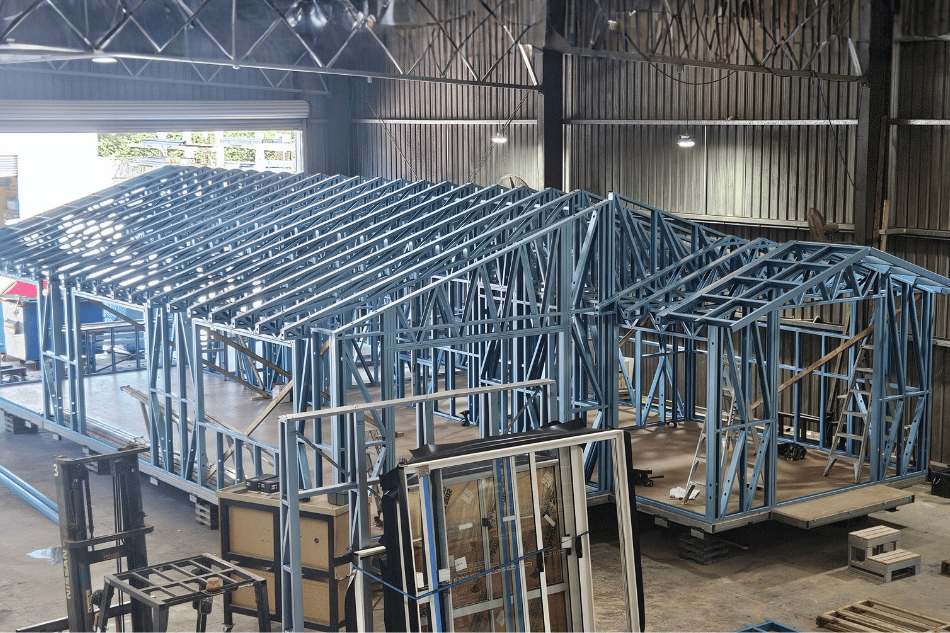
- Factory precision: Every component is built under controlled conditions, reducing inconsistencies.
- Stronger frames: Modular homes are built to withstand transport stresses, which means they often have more robust internal framing.
- Faster compliance checks: Standardised, engineered designs simplify the certification process.
Leading modular builders already deliver homes certified for C2 or C3 wind ratings, with compliant materials and structural systems reviewed by certified engineers.
And it’s not just theoretical. We’ve seen Australian family couples who are smart about their investment in their family home based on both style and value choose cyclone-rated modular builds in places that have challenging weather—proving it’s not only possible, but practical.
But not all modular homes are cyclone-rated by default. It’s something you have to ask for.
What You Should Ask Before You Buy
If you’re planning to build a modular home in a cyclone zone, here’s your checklist:
- What wind region is my site in? Make sure your builder knows if you’re in Region C or D.
- Is the design certified to the correct wind classification (C1 to C4)? Ask to see the engineering documents that state this clearly.
- What specific cyclone-rated features are included? You’re looking for things like upgraded bracing, tie-downs, window systems, and roofing.
- Are the footings and anchoring engineered for cyclonic uplift? This varies by site and must be designed to suit your location.
- Is this a proven design in cyclone zones? Ask for examples of homes already built to cyclone standards—ideally in similar regions.
- Does the builder regularly work in cyclone-prone areas? Experience matters. Builders who understand the local council requirements and approval processes will save you time and stress.
Why Modular Can Be a Smart Choice in Cyclone Regions
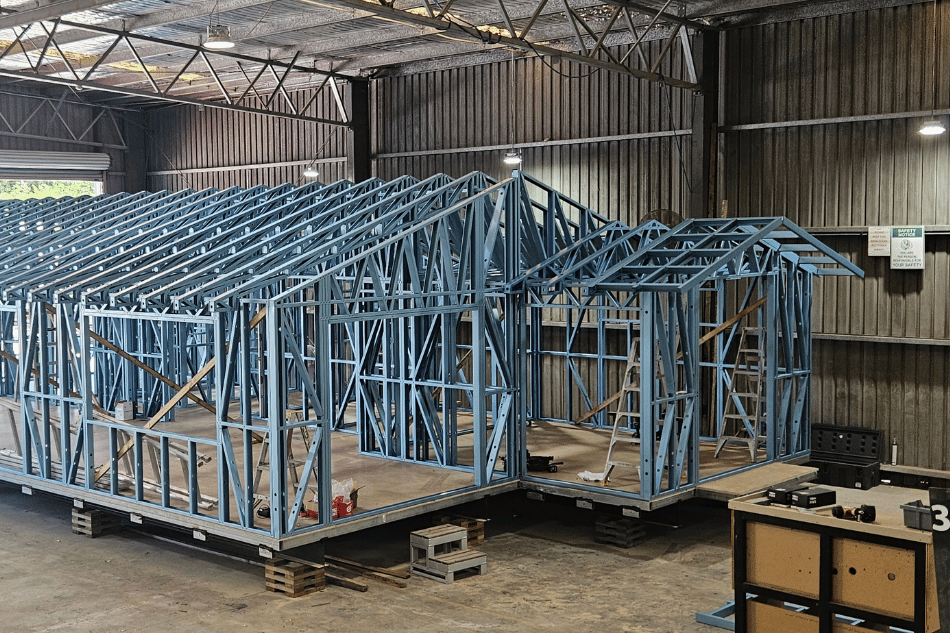
Modular homes are engineered for strength. They’re built to comply with the same structural standards as any site-built home, with the added benefit of being constructed in a controlled environment where precision and quality can be tightly managed.
Modular homes are:
- Purpose-built – Designed for exact conditions and wind loads from the outset
- Efficient – Off-site construction means faster turnaround and fewer weather delays
- Engineered for transport – Which demands higher structural integrity
- Repeatable and certifiable – Proven systems can be certified again and again, with confidence
In cyclone-prone areas, that means you can get a home that’s safer, faster, and just as compliant as any site-built alternative.
In Summary: Yes, You Can—Just Ask the Right Questions
You can absolutely get a modular home that withstands cyclones, but it comes down to the design, the engineering, and the builder’s experience.
Don’t assume it’s standard. Make sure you:
- Confirm your site’s wind region
- Ask about the home’s wind classification
- Review the engineering documentation
- Choose a builder with proven cyclone-zone projects
Many Australian families are already making informed decisions and choosing modular for cyclone regions—particularly those who balance value and long-term durability with design and liveability. They’re getting homes that are fit for purpose—and fit for their future.
Helpful Resources
Want to explore more about cyclone ratings and modular home standards?
- Australian Building Codes Board – AS/NZS 1170.2 and AS 4055
- Bureau of Meteorology – Cyclone Data & Risk Maps
- Manor Homes – Modular Living Designed for the Australian Landscape
Building Stories, Crafting Homes—including homes strong enough for Australia’s wildest weather.