

The NSW Government is backing modular and prefabricated construction as part of its response to the housing shortage.
It’s a significant shift for the building industry. But for an average family planning a detached home in regional, rural or remote NSW, the immediate impact is limited.
Most of the government’s modular housing program is focused on producing housing at scale. Think medium-density housing, government projects and Pattern Book designs—not individual family homes on country blocks.
The more relevant development for private home buyers is the proposed change to NSW building laws and approvals.
What Has the NSW Government Announced?
The government is seeking private-sector partners to establish or expand manufacturing facilities for prefabricated building components and large-scale modular housing.
The current program is focused on higher-volume housing and government-supported projects. It’s intended to increase local manufacturing capacity, strengthen supply chains and help deliver more housing across NSW.
That’s unlikely to have much direct impact on a family building one detached home in regional NSW.
The proposed Building Productivity Reforms are more relevant.
How Could NSW Modular Home Approvals Change?
The NSW Government wants to formally recognise modular and prefabricated buildings within the state’s building laws.
The proposed reforms would treat factory-built homes more consistently with traditionally constructed homes. They’re also intended to create clearer responsibilities across manufacturing, supply, transport, delivery and installation.
The changes could:
- reduce duplication in approval documentation
- remove unnecessary administrative steps
- clarify what’s required before construction begins
- create more suitable certification and licensing requirements
- strengthen accountability throughout the modular building process.
For home buyers, that could mean a clearer and more consistent process.
But it won’t mean no approvals.
Modular homes will still need to meet the same planning requirements, building standards and site-specific conditions as other homes.
The Building (Approvals and Practitioners) Bill 2026 has been introduced to Parliament, but many of the practical details will depend on the final legislation and supporting regulations.
Will Modular Homes Become Easier to Approve?
Potentially. But not automatically.
A clearer statewide framework could make modular projects easier for councils, certifiers, designers and builders to understand.
That may be particularly helpful in regional, rural and remote NSW, where some councils and certifiers have more experience with modular homes than others.
However, planning approval and building approval aren’t the same thing.
The proposed changes are mainly focused on the building approval process that follows planning approval. They won’t remove the need to prove that a home is suitable for a particular block.
Depending on the property, approvals may still need to address:
- zoning and local planning controls
- bushfire and flood requirements
- soil conditions and slope
- wastewater and service connections
- environmental constraints
- road, delivery and crane access.
Factory construction can simplify parts of the building process. It can’t make the land or local requirements disappear.
The Fundamentals Haven’t Changed
This is the point smart home buyers understand.
A government announcement doesn’t replace proper planning. A modern construction method doesn’t remove project risk. And a faster factory build won’t help if the site, approvals, services or delivery access haven’t been properly considered.
Well-prepared families still focus on the fundamentals:
- a design that suits their land and lifestyle
- a thorough site assessment
- realistic allowances for approvals, services and site works
- clear responsibility for every stage of the project
- a written scope showing exactly what’s included
- a reputable, experienced and properly licensed builder.
That’s what sensible buyers do. They look beyond the headline promise and understand the complete project.
What Won’t Change for Regional Families?
Site costs will still matter.
Transport will still matter.
Council conditions will still matter.
Distance, regional labour availability, bushfire requirements, wastewater systems and off-grid services can all affect the full project cost.
A modular home also isn’t automatically cheaper or faster simply because it’s built in a factory.
The outcome depends on the design, the site, approvals, factory capacity, transport and how well the onsite and factory work are coordinated.
A good modular building process should bring those parts together early, rather than treating the home, land and approvals as separate problems.
What Should Families Do Now?
Don’t change your building plans because of one government announcement.
Instead, ask better questions:
- Has the builder assessed the land and delivery access?
- Who manages the planning and building approvals?
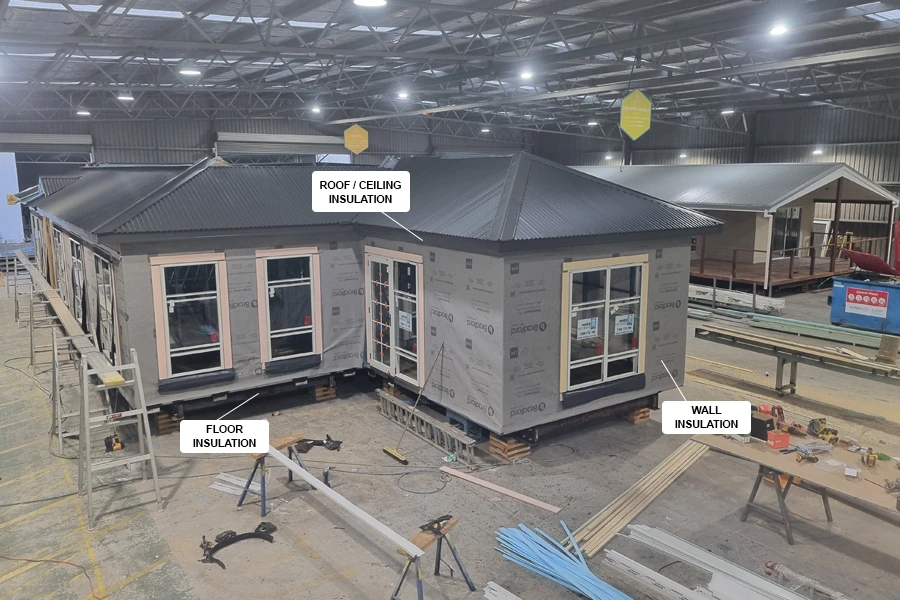
- What’s completed in the factory?
- What work remains onsite?
- Are transport, installation, services and site works included?
- What reports may be required?
- Who’s responsible if something changes?
- Is the builder licensed and insured?
Before signing anything, buyers should also use the NSW home building licence check and understand the requirements for a home building contract.
Clear answers matter more than broad claims about speed or savings.
The Bottom Line
NSW’s push for modular housing is a positive sign that factory-built construction is becoming more recognised within the housing industry.
For families building detached homes in regional, rural and remote NSW, the government’s manufacturing partnerships and Pattern Book program probably won’t have much direct impact.
The proposed regulatory changes are more relevant. They may create clearer rules, reduce duplication and improve accountability across the modular building process.
Helpful? Yes.
An overnight change for home buyers? No.
Smart families will keep doing what matters: understand the land, plan approvals early, allow for the complete project cost and choose a builder with the experience to manage the whole process.