


When you compare modular home builders, it can feel straightforward at first. You look at floorplans, compare prices, browse photos and decide which homes you like.
But those things only tell you part of the story.
Two builders can offer similar-looking homes while providing very different services, inclusions and site assessments. Their quotes may also cover different things, which makes a simple price comparison misleading.
Before you choose a modular builder, it’s worth understanding exactly what you’re comparing.
These 12 questions will help you do that. You can ask them of any modular builder, including Manor Homes, so you can make a more informed decision before you sign.
For many Australian couples planning a family home, style is only part of the decision. They’re also considering how the home will work for their family and whether the investment makes sense long term.
1. How much relevant modular building experience do you have?
Relevant experience matters because modular projects can vary significantly by home design, site and delivery requirements. Ask whether the builder has completed projects similar to yours, rather than relying only on the number of years they’ve been operating. Longevity provides useful context, but it doesn’t guarantee quality on its own.
For example, building on a flat block differs from building on a sloping rural property with difficult access. Likewise, experience with small secondary dwellings may not translate directly to larger family homes.
Useful follow-up questions include:
- How many modular homes have you completed?
- What types of sites do you regularly build on?
- Have you completed homes similar in size and complexity to mine?
- Can you show me examples?
Look for experience the builder can demonstrate, particularly where the site, home size or project complexity resembles your own.
2. What exactly is included in the quoted price?
Always compare the scope of a quote, not just the headline price. A cheaper quote may simply include less work. Before comparing modular home builders on cost, ask each one for a clear breakdown of inclusions so you can see what you’re actually receiving for the price being quoted.
Depending on the project, this may include:
- the home itself
- standard fixtures and finishes
- site works
- foundations
- transport
- installation
- service connections
The key is not to assume.
If you’re comparing two builders, put their inclusions side by side. A $500,000 quote and a $550,000 quote aren’t directly comparable if their scopes differ significantly.
Compare what you receive for the price, not just the number at the bottom.
As an example of the level of detail worth looking for, Manor Homes publishes its standard inclusions and available options.
3. What is specifically excluded from the price?
Exclusions deserve the same attention as inclusions because they can materially change your final project cost. Ask every builder to identify exclusions clearly and in writing. You need to know what the builder covers, what you’ll need to organise separately and which costs remain uncertain before you can compare quotes properly.
Some costs may sit outside the main building contract. These could include:
- approvals
- consultants
- service connections
- landscaping
- driveways
- unusual site works
- other project-specific items
An exclusion doesn’t automatically make a quote poor value.
What matters is visibility. Once you know what isn’t included, you can allow for those costs and compare competing proposals on a more equal basis.
4. How do you assess my site before giving me a firm price?
A modular home’s site can affect design, foundations, transport, installation and overall cost. Ask what site investigations happen before the builder finalises your price. The more that is understood early, the easier it is to identify potential constraints and understand which site-related costs are known and which may still change.
A site assessment may consider:
- slope
- soil and ground conditions
- vehicle and crane access
- existing services
- bushfire requirements
- flood considerations
- site drainage
- distance from the construction facility
- the transport route for the modules

The level of investigation will depend on the project.
If significant questions remain unanswered, ask how the builder has allowed for that uncertainty in the price.
It can also help to see where site assessment sits within the builder’s overall process. For example, Manor Homes includes a site visit early in its published journey from initial planning through to completion.
5. What happens if unknown site conditions are discovered?
Unexpected site conditions can arise even when a builder has investigated the property carefully. What matters is having a clear process for dealing with them. Before signing, ask who determines what extra work is necessary, how you’ll be informed, how additional costs are calculated and whether the programme could change.
Useful questions include:
- Who decides whether extra work is required?
- How will you tell me?
- Will I receive a price before work proceeds?
- Could the change affect the construction schedule?
- Are provisional allowances included for particular risks?
You’re not looking for a promise that nothing unexpected will happen. On some properties, that wouldn’t be realistic.
Instead, look for transparency about how unknowns are managed if they arise.
6. Who manages council approvals and other required approvals?
Approval responsibilities differ between builders, so establish them before you sign. Ask which applications, drawings, reports and consultants the builder coordinates and which remain your responsibility. A clear answer should tell you who manages each stage, what information or payments you must provide and when approvals need to happen.
Depending on your location and project, you may need:
- council or certifier approvals
- engineering
- planning requirements
- specialist reports
Some builders coordinate much of this work. Others leave more of it to the owner or external consultants.
Neither arrangement is automatically right or wrong.
Before signing, you should be able to answer three questions: who is responsible, what needs to happen and when?
7. How are variations handled after I sign?
A good variation process tells you how a change will affect scope, cost and timing before the altered work proceeds. Ask how variations are requested, priced, documented and approved. You should also understand what happens when the builder initiates a change, rather than assuming every variation will come from you.
You should understand:
- how you request changes
- how the builder prices them
- who approves them
- whether work begins before or after written approval
- how a variation may affect the schedule
A clear process protects both parties because everyone can see what changed, why it changed and what it costs.
For NSW projects, the NSW Government explains requirements for residential building contracts, variations and statutory warranties.
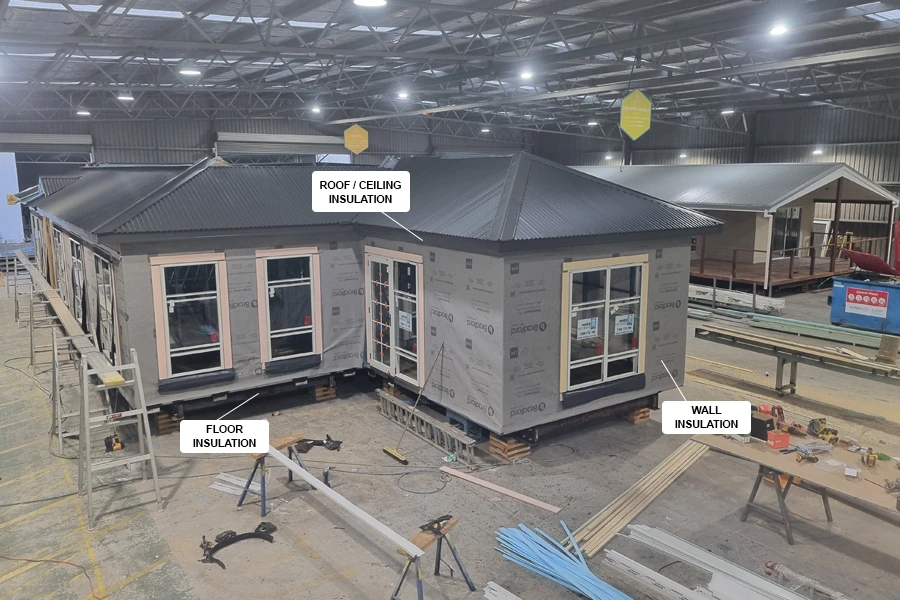
8. Where and how is the modular home constructed?
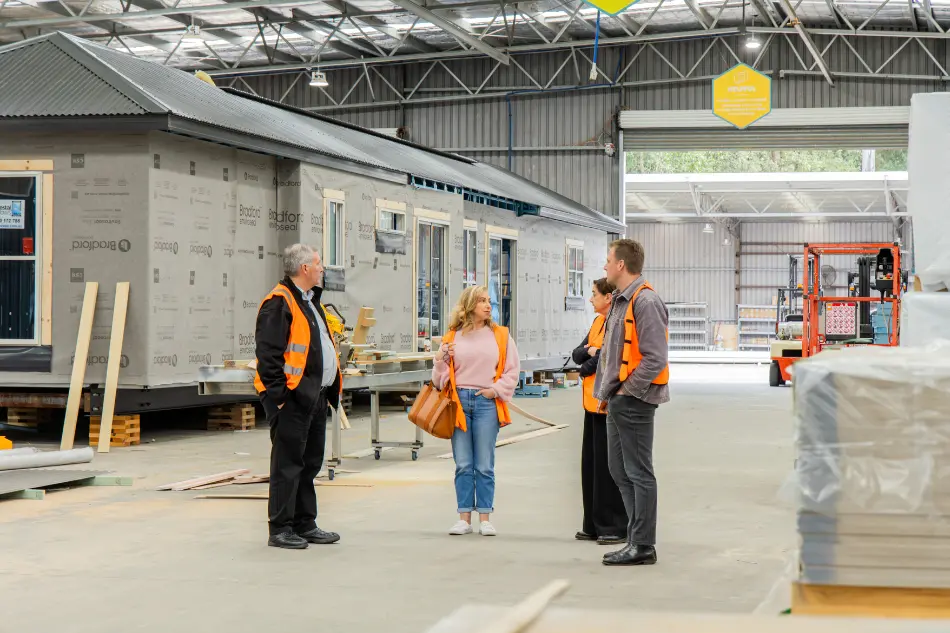
Modular home builders don’t all use exactly the same construction process. Ask where your home will be built, how much work is completed before delivery and what remains to be done on site. You should also understand what quality checks occur during construction rather than judging the process only by finished photographs.
Ask what work takes place in a factory or controlled environment and what work happens after the modules arrive at your property.
That distinction matters when comparing builders.
It helps you understand how the home progresses from construction through transport, installation and final completion.
If you’re unfamiliar with the method, Manor Homes explains how its modular homes are constructed, transported and reassembled on site.
9. Who manages transport, delivery and installation?
Transport and installation are central parts of a modular project, not an afterthought. Ask who assesses the delivery route, plans property access, organises any required cranes or permits and manages installation. You should also know what happens if the delivery route or access proves more difficult than originally expected.
Useful questions include:
- Who assesses the transport route?
- Who checks access to the property?
- Who organises cranes if required?
- Who manages permits or traffic requirements?
- What happens if access is harder than expected?
This is especially important for regional and rural properties.
Narrow roads, bridges, trees, gates and steep access can complicate delivery. Understanding the logistics early gives you a clearer idea of both responsibility and potential cost.
10. Can I inspect completed homes or speak with previous customers?
Completed homes and previous customers can tell you things that floorplans, reviews and professional photography cannot. Ask whether you can inspect relevant examples of the builder’s work and, where possible, speak with customers who completed a similar project. Focus on their experience of the whole process, not just the finished home.
Useful questions for previous customers include:
- Was the process explained clearly?
- Were costs communicated well?
- How did the builder handle problems?
- Did the builder keep you informed?
- Was the completed home what you expected?
- How was the builder after handover?
Where possible, choose references whose homes or sites resemble yours.
Strong performance on a straightforward project doesn’t automatically show how the same builder will handle a more complex property.
11. What warranties apply, and what happens after handover?
Ask about both the warranties that apply to the building work and the builder’s practical process after handover. You need to know what is covered, how issues are reported, who responds and what happens if something needs attention. A warranty is more useful when the process for accessing it is also clear.
Useful questions include:
- What warranties apply?
- How do I report a problem?
- Who do I contact?
- How quickly are issues assessed?
- What happens during the defects period?
Also understand the difference between statutory warranties and any additional service or warranty the builder offers.
For NSW residential building work, statutory warranties apply even if they aren’t written into the contract. Current NSW Government guidance states six years for major defects and two years for all other defects.
The important thing is knowing what applies to your project and what happens if you need help after moving in.
12. What should I understand about your process before I sign?
Before signing, you should be able to explain the builder’s process from site investigation to handover in simple terms. Ask when design, pricing, approvals, construction, transport and installation occur. You should also know when important decisions are made, when costs may still change and who will keep you informed.
Ask the builder to walk you through the major stages, which may include:
- site assessment
- design
- pricing
- approvals
- construction
- transport
- installation
- completion
Then ask about the important decision points:
- When are colours and finishes selected?
- When is the price fixed?
- At what stages can costs still change?
- Who will be my main contact?
- How often will I receive updates?
- What documents will I receive?
A good process should make sense before you enter it.
You shouldn’t have to sign first and discover later how your project is going to work.
How should you compare modular home builders?
Compare modular home builders by looking at the complete proposal rather than choosing one impressive floorplan or headline price. Put scope, exclusions, site risk, relevant experience and process side by side. Then investigate any areas that remain vague so you understand both what you’re buying and how the project will be delivered.
Start by making sure the quoted scopes are genuinely similar.
Put inclusions and exclusions next to each other. Then identify any areas where costs remain uncertain.
Next, look at how each builder manages:
- site risk
- approvals
- variations
- transport
- installation
- after-handover support
Relevant experience matters too.
Consider whether each builder has completed homes on sites similar to yours. Ask whether they can provide examples or customer references.
This kind of balanced comparison matters when you’re making a significant family investment. A beautiful home matters, but so do the process, cost and long-term value.
Finally, consider how clearly each builder answers your questions.
A vague answer isn’t always a reason to rule a builder out. However, it is a reason to keep asking questions until you understand what you’re agreeing to.
Floorplans and price will always matter when comparing modular home builders. They’re just not the whole comparison.
The more you understand before signing, the easier it becomes to make an informed decision based on the complete project rather than the headline price alone.
Frequently asked questions about comparing modular home builders
What is the most important thing to compare between modular home builders?
Compare the complete scope, not just the price. Look at inclusions, exclusions, site costs, approvals, transport, installation, warranties and the builder’s process. A lower quote may not represent better value if important parts of the project sit outside it.
Should I choose the modular builder with the lowest quote?
Not automatically. First make sure the quotes cover comparable work. One builder may include items another excludes. The useful question is not simply, “Which price is lowest?” but, “What am I receiving, what remains uncertain and what might I still need to pay for?”
What should a modular builder assess on my site?
The assessment may include slope, soil, services, access, drainage, bushfire or flood requirements and the route needed to transport modules to the property. The exact investigations depend on the project, so ask what will be assessed and what site risks remain unknown.
How should a builder handle variations?
A variation process should clearly document what is changing, why, what it will cost and how it affects timing. For applicable NSW residential building work, contract variations are generally required to be documented in writing and agreed by the parties.
Should a modular builder let me speak with previous customers?
It’s reasonable to ask. Where references are available, try to speak with customers whose homes or sites are similar to yours. Ask about communication, cost clarity, problem-solving and the builder’s support after handover, rather than simply asking whether they were happy with the finished home.