



Choosing Paint for NSW Homes: Finishes That Handle Light, Wear and Everyday Living
Most people think paint is just coloured water. However, choosing paint for NSW homes (or any home) is more than picking a colour. Paint choices affect how a home looks, cleans, and lasts.
That’s why Australian family couples who are smart about their investment in their family home tend to do one thing well. They learn the basics, then they trust the experts. They don’t try to outguess designers and painters.
This guide explains paint in plain terms. It also explains why different rooms need different finishes.
Paint isn’t just colour
Paint has three main “jobs”:
- Colour: what you see
- Binder: what makes paint stick and harden
- Additives: what helps with washing, wear, and moisture
So, two paints can look the same. Yet they can perform very differently. That’s why “paint is paint” often ends in disappointment.
Choosing paint starts with sheen (shine level)
Sheen is how much light the surface reflects. In other words, it’s the “shine level”.
Here’s the simple breakdown:
- Flat / matt
Looks soft and hides small wall flaws. However, it can mark more easily. It can also dislike heavy scrubbing. - Low-sheen
Works well for everyday living. It wipes better than flat. Still, it keeps a calm look. - Higher sheen finishes
Often wipe very well. However, they can show wall imperfections. They can also reflect more light.
So, every finish is a trade-off. You choose what matters most in each space.
Three things that change the “right” paint finish
1) Natural light
Strong daylight can highlight:
- plaster joins and patching
- roller marks
- texture changes
- sheen differences
Therefore, a wall can look different at different times of day. Often, the light causes it. The colour isn’t always the problem.
2) Everyday wear
Every home has “touch zones”. For example:
- hallways
- around light switches
- behind dining chairs
- kids’ rooms
- entries near doors
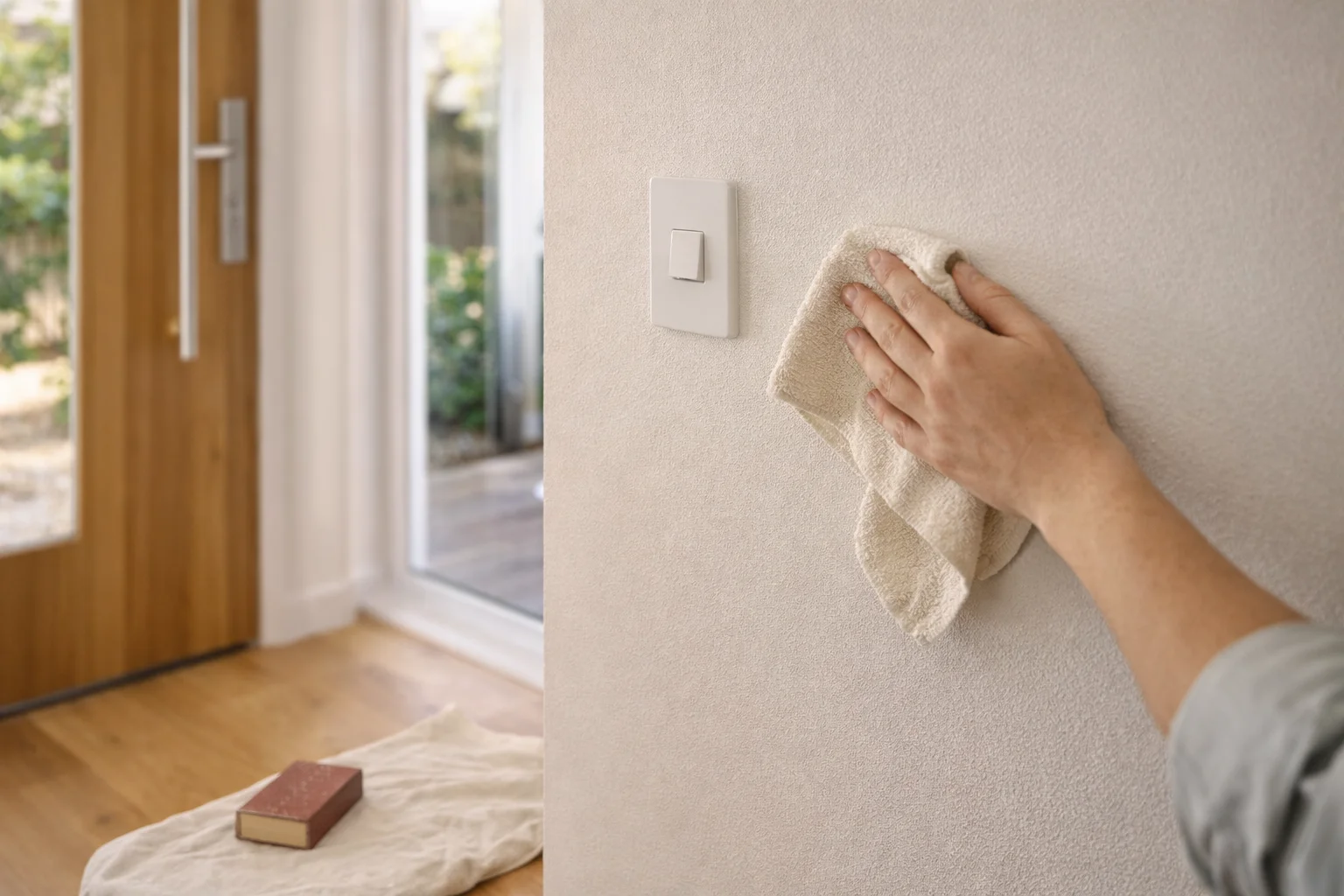
So, these areas need finishes that handle scuffs. They also need finishes you can wipe.
3) Moisture
Bathrooms, laundries, and kitchens create steam. They also get splashes and condensation. Because of that, washability matters more in these rooms.
A simple room-by-room guide
This table stays general on purpose. It helps you think the way professionals think.
| Area | What matters | What you’re balancing |
| Ceilings | Glare + hiding flaws | Low reflection and a smooth look |
| Living areas | Light + appearance | Calm look with sensible wipeability |
| Hallways / entries | Scuffs + fingerprints | Durability without looking too shiny |
| Kids’ rooms | Marks + cleaning | Easy cleaning without patchy touch-ups |
| Kitchen walls | Grease + wiping | Washability for frequent cleaning |
| Bathrooms / laundries | Steam + condensation | A system suited to regular wiping |
| Doors / trim | Hands + knocks | Tough finish for constant contact |
Notice what’s missing from the table? you won’t see brand names here. The goal is the right type of finish for the job.
Prep matters more than people realise
Here’s the blunt truth. Most “paint problems” start before painting begins.
Good results depend on:
- correct sealing and priming
- proper sanding and patching
- enough coats for coverage
- correct drying and curing time
So, paint can fail even with a good product. That happens when prep falls short. That’s why builders and painters focus on process.
Colour can change behaviour
Colour can change:
- how many coats you need
- how even the finish looks
- how visible touch-ups become
- how much light a wall reflects
Darker colours can look great. However, they often show marks more easily. So, your team may adjust the finish to suit your choices.
A quick note on low-odour options
Some people prefer low-odour or low-VOC options. If that matters to you, mention it early. Your team can usually guide you without overcomplicating things.
The takeaway: you don’t need to be a paint expert
You only need the basics. Then you can trust the right people.
And the people who usually get the best long-term result are the ones who treat paint like any other part of the build: Australian family couples who are smart about their investment in their family home.
They ask a few good questions. Then they let the experts handle the detail.
Helpful questions to ask
- Which rooms will need the most wiping?
- Which walls get strong daylight?
- What’s the trade-off with a flatter finish?
- How long until the paint fully cures?
- When can we safely start cleaning walls?