

When people hear the term BAL rating, they often think about building materials.
Windows. Doors. Cladding. Vents. Mesh. Roof details.
And yes, a BAL rating can affect all of those things.
But that’s not the whole story.
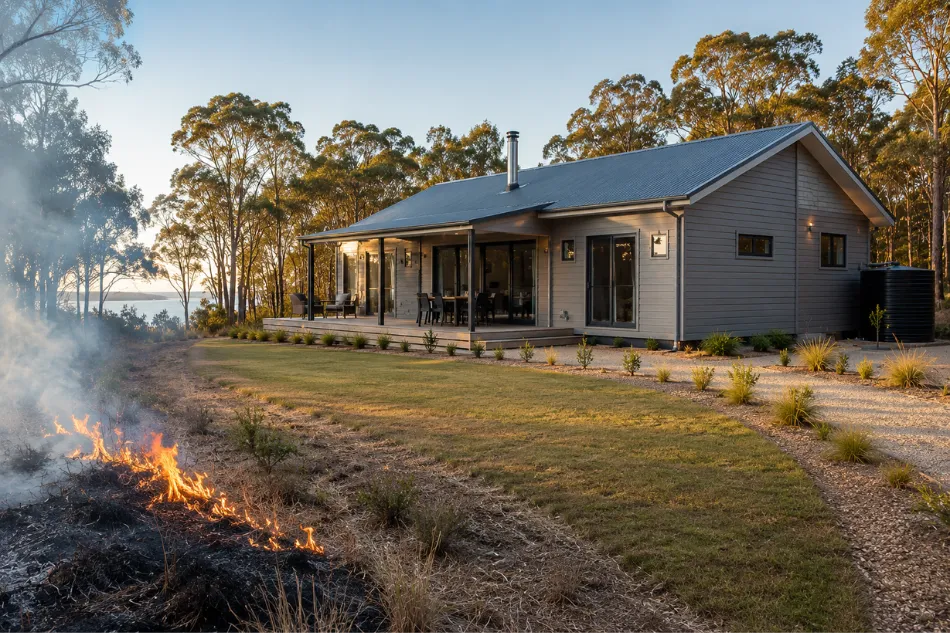
A BAL rating can also affect your home design and layout. It may influence where the home sits on the block, where verandahs or decks go, how close different parts of the home are to trees, where large windows and doors are placed, and how the home connects to the land.
That’s why a BAL rating shouldn’t be treated as a small technical detail that gets sorted later.
It can be a design input from the start.
For Australian family couples who are smart about their investment in their family home (style and value), this is worth understanding early. The earlier the right information is known, the easier it is to make good decisions before the layout is locked in.
What is a BAL rating?
BAL stands for Bushfire Attack Level.
It’s a way of measuring a building’s potential exposure to bushfire risk. That can include ember attack, radiant heat and direct flame contact.
The NSW Rural Fire Service explains that bushfire risk is affected by vegetation, distance from vegetation to the home, and slope. That’s why the BAL rating needs to be assessed against the actual site, not guessed from a distance.
Manor has a separate article that explains BAL ratings in more detail. This article is focused on one specific question: can a BAL rating affect the actual home design and layout?
The short answer is yes, it can.
A BAL rating can affect more than materials
Sometimes a BAL rating mainly affects construction details.
That might mean upgraded windows, different doors, ember protection, specific cladding requirements, or changes to vents and openings.
But on some sites, it can go further than that. A BAL rating may influence:
- where the home sits on the block
- where verandahs, decks or patios are located
- how outdoor living connects to the home
- whether a garage or attached structure needs to be reconsidered
- where large windows and doors are best placed
- how close parts of the home are to trees or unmanaged vegetation
- driveway and access considerations
- water supply requirements
- landscaping and vegetation management around the home
That doesn’t mean every BAL rating will completely change a design.
But it does mean the rating can’t be ignored while the layout is being developed.
Why assumptions can cause problems later
Sometimes a BAL rating mainly affects construction details.
That might mean upgraded windows, different doors, ember protection, specific cladding requirements, or changes to vents and openings.
But on some sites, it can go further than that. A BAL rating may influence:
- where the home sits on the block
- where verandahs, decks or patios are located
- how outdoor living connects to the home
- whether a garage or attached structure needs to be reconsidered
- where large windows and doors are best placed
- how close parts of the home are to trees or unmanaged vegetation
- driveway and access considerations
- water supply requirements
- landscaping and vegetation management around the home
That doesn’t mean every BAL rating will completely change a design.
But it does mean the rating can’t be ignored while the layout is being developed.
Why a proper early process matters
This is where the right building process makes a real difference.
Some builders may offer a free quote very early, based on limited information. That can feel helpful at the start. It gives the customer a number and makes the project feel like it’s moving.
But if that quote is based on incomplete site information, it may not protect the customer later.
A better process gathers the right information before the design is treated as settled. In NSW, Planning for Bush Fire Protection sets out requirements that can include siting, access, vegetation management, water supply and building construction measures on bushfire-prone land.
That early investment in advice and reports can feel like an extra step. But it can save a lot of pain later.
The goal isn’t to slow things down. It’s to make sure the project is heading in the right direction before too many decisions are locked in.
What parts of the home could be affected?
CSIRO notes that identifying the BAL can help you site a new structure or better manage an existing one. That’s the point: the BAL rating can influence the whole design response, not just the materials list.
The position of the home on the block can affect its bushfire exposure. A home closer to classified vegetation may face a different level of risk than a home positioned further away. Slope can also matter, because fire behaviour changes with the land.
Outdoor living areas can also be affected. Verandahs, decks, patios and alfresco areas often connect the home to the landscape. But if they sit too close to vegetation or bushfire hazards, the design may need to be reconsidered.
Garages, carports, breezeways and attached structures can matter too. They form part of the overall footprint and shouldn’t be treated as afterthoughts.
Windows and doors may also need careful thought. Large openings bring in light and connect the home to the view, but on bushfire-prone land, their location, size and construction may need to respond to the BAL rating.
Landscaping is part of the picture as well. Trees, shrubs, grass, gardens and future planting can all affect how the home is planned and maintained.
A well-designed home should sit in harmony with the landscape. On bushfire-prone land, that means respecting the landscape while also taking the risk seriously.
Can you still get a beautiful home with a higher BAL rating?
Yes.
A higher BAL rating doesn’t automatically mean the home will be ugly, awkward or compromised.
It may mean the design needs to be more considered. It may mean the home needs to sit differently on the block. It may mean a verandah, deck or garage needs to move. It may mean some materials or details need to change.
But with the right advice and a clear process, it’s still possible to create a well-designed family home that works for the site, supports the lifestyle, and feels right to live in.
The point isn’t to panic about BAL ratings. The point is to respect them.
Questions to ask early
If you’re looking at land or starting the design process, it’s worth asking a few direct questions early.
- Is my land bushfire prone?
- Are we working from an assumed BAL rating or a confirmed BAL rating?
- Who will complete the BAL assessment?
- Could the BAL rating affect where the home sits on the block?
- Could it affect verandahs, decks, patios or outdoor living areas?
- Could it affect the garage, carport or attached structures?
- Could it affect windows, doors or cladding?
- What happens if the final BAL rating comes back higher than expected?
- Should we wait for specialist advice before locking in the layout?
- What other site reports should be completed before the design goes too far?
These questions help move the project from guesswork to informed decision-making.
Don’t design too far ahead of the facts
A BAL rating can affect more than the materials used in a home.
It can influence layout, siting, outdoor living, access, landscaping and the way the home connects to the land.
That doesn’t mean every home on bushfire-prone land needs a major redesign. And it doesn’t mean customers should be worried before they even begin.
It simply means the process matters.
Work with people who know what needs to be checked. Bring in the right specialists. Be prepared to invest in the right advice early.
A free quote based on assumptions may feel attractive at the start, but it can create false confidence.
A clear process, supported by proper advice, gives you a better chance of making decisions that hold up later.
The best time to understand the BAL rating is before everyone falls in love with a layout that may need to change.
That’s how smart families protect their investment in their family home.