


A Straight Talk on Power, Choice, and the Long Game
If you’re building a new home in rural or remote Australia, chances are you’ve already had a few conversations about power. Whether it’s the cost of getting connected to the mains grid, the reliability of existing infrastructure, or the long distances involved, energy can become one of the biggest planning headaches—especially for families wanting a home that supports a modern lifestyle.
That’s where solar energy, especially when paired with battery storage, starts getting attention. Not because it’s trendy, but because in some cases—it just makes good sense.
Let’s be upfront: this isn’t a sales pitch for solar, and it’s not an argument for sticking with the grid either. The reality is that a lot of the time, going solar with battery storage doesn’t quite stack up economically—at least not yet. But in some situations, particularly in off-grid or fringe areas where mains power is hard to reach or unreliable, it can absolutely make sense and be the smarter long-term choice.
This blog unpacks what it looks like, how it works with modular homes, and what to consider before making the call.
Why Solar + Storage Is Even on the Table
Across Australia—and the world—communities in outlying regions have struggled with consistent access to electricity. In Australia, one of the biggest challenges is simply the sheer distance. Homes and properties are often located far from existing infrastructure, and those long stretches come with high connection costs. The reasons vary, but the results are similar: expensive diesel generators, noisy operations, and limited access to the kinds of appliances most of us take for granted.
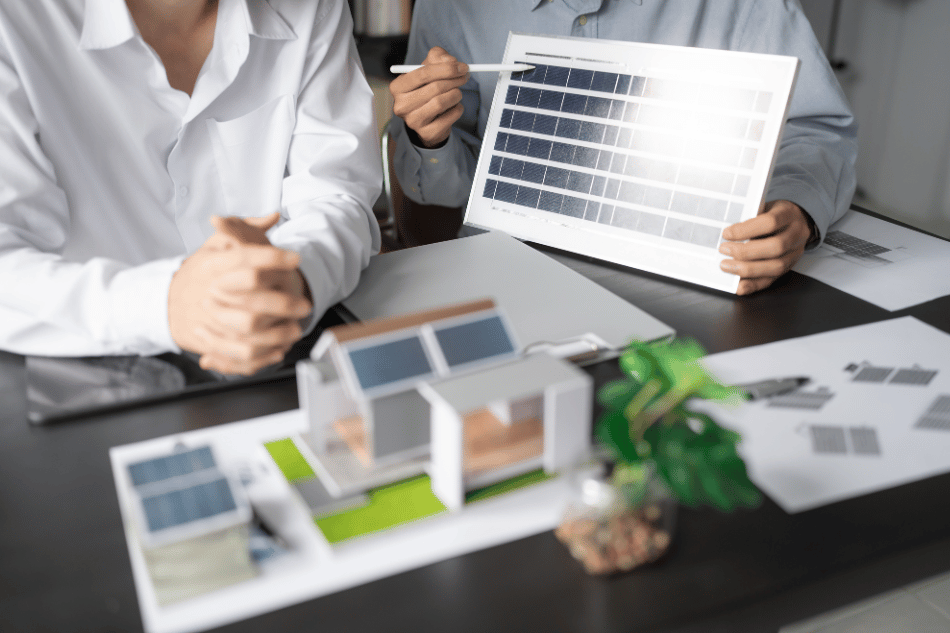
That’s why solar power, combined with a battery system, is becoming more appealing. It’s clean, relatively low-maintenance, and can help households go completely off-grid or reduce reliance on it. And with solar technology improving and prices slowly becoming more competitive, the timing is starting to make more sense for some families.
We’ve seen more Australian family couples who are smart about their investment in their family home
—balancing both style and long-term value—take a closer look at solar as part of their early planning. For some, it’s not just about today’s costs, but tomorrow’s freedom and flexibility.
The Numbers Behind It All
Let’s talk facts. Australia is leading the world when it comes to rooftop solar. More than 30% of homes nationwide now have solar panels installed. That number keeps climbing as people look for ways to manage rising energy costs and cut back their footprint.
When you throw batteries into the mix, it changes the equation. Adding battery storage can boost the annual savings from around $1,500 (solar only) to as much as $2,300. That’s a decent bump, especially if you’re running a larger home or planning for future needs like electric vehicles or home offices.
Battery installations are surging too. In 2024 alone, Australians installed around 75,000 new home batteries—a 47% increase over the previous year. By the end of that year, over 320,000 homes had both solar panels and storage. For many of these households, especially in remote areas, it wasn’t just about savings—it was about stability and self-sufficiency.
When Going Solar Does Make Sense
There are times when solar and battery storage is worth serious consideration. Generally, it’s a good option if you’re:
- Building in a location where mains power isn’t available or is too expensive to connect
- Experiencing unreliable or inconsistent power (frequent blackouts, voltage drops)
- Planning to live long-term in a home where you want energy certainty
- Looking for an environmentally sound lifestyle, with reduced emissions and less reliance on fossil fuels
- Willing to invest now for long-term benefits, especially with state-based rebates and incentives
For example, if connecting to the mains grid is going to cost you upwards of $25,000 because of the distance to the nearest power line, then spending a similar amount—or slightly more—on a solar + battery setup might be the more logical move. And once it’s installed, you’re producing your own power, day in and day out.
When It Doesn’t Make Sense
As attractive as it sounds, the majority of families don’t need to go all-in on solar and battery storage—at least not yet.
Here’s why:
- Upfront costs are still high: Even with rebates, a full system (solar panels, inverter, battery) can cost between $12,000 and $20,000, depending on your setup.
- Payback periods can stretch out: If you’re still connected to the grid, and your usage is moderate, it can take 10–15 years to see real returns—sometimes longer.
- Some setups still need a backup: In off-grid homes, a generator is often needed to cover cloudy periods or heavy usage days, which adds cost and complexity.
- Maintenance and future replacement: Batteries don’t last forever—typically 10 to 15 years. So you’ll need to factor in future replacements and upkeep.
In short, it’s not about being for or against solar. It’s about whether it works for your situation. For many families, staying connected to the grid and installing a small solar system without a battery might be the perfect balance.
Why Solar + Storage Is Even on the Table
Across Australia—and the world—communities in outlying regions have struggled with consistent access to electricity. In Australia, one of the biggest challenges is simply the sheer distance. Homes and properties are often located far from existing infrastructure, and those long stretches come with high connection costs. The reasons vary, but the results are similar: expensive diesel generators, noisy operations, and limited access to the kinds of appliances most of us take for granted.
That’s why solar power, combined with a battery system, is becoming more appealing. It’s clean, relatively low-maintenance, and can help households go completely off-grid or reduce reliance on it. And with solar technology improving and prices slowly becoming more competitive, the timing is starting to make more sense for some families.
We’ve seen more Australian family couples who are smart about their investment in their family home
—balancing both style and long-term value—take a closer look at solar as part of their early planning. For some, it’s not just about today’s costs, but tomorrow’s freedom and flexibility.
The Numbers Behind It All
Let’s talk facts. Australia is leading the world when it comes to rooftop solar. More than 30% of homes nationwide now have solar panels installed. That number keeps climbing as people look for ways to manage rising energy costs and cut back their footprint.
When you throw batteries into the mix, it changes the equation. Adding battery storage can boost the annual savings from around $1,500 (solar only) to as much as $2,300. That’s a decent bump, especially if you’re running a larger home or planning for future needs like electric vehicles or home offices.
Battery installations are surging too. In 2024 alone, Australians installed around 75,000 new home batteries—a 47% increase over the previous year. By the end of that year, over 320,000 homes had both solar panels and storage. For many of these households, especially in remote areas, it wasn’t just about savings—it was about stability and self-sufficiency.
When Going Solar Does Make Sense
There are times when solar and battery storage is worth serious consideration. Generally, it’s a good option if you’re:
- Building in a location where mains power isn’t available or is too expensive to connect
- Experiencing unreliable or inconsistent power (frequent blackouts, voltage drops)
- Planning to live long-term in a home where you want energy certainty
- Looking for an environmentally sound lifestyle, with reduced emissions and less reliance on fossil fuels
- Willing to invest now for long-term benefits, especially with state-based rebates and incentives
For example, if connecting to the mains grid is going to cost you upwards of $25,000 because of the distance to the nearest power line, then spending a similar amount—or slightly more—on a solar + battery setup might be the more logical move. And once it’s installed, you’re producing your own power, day in and day out.
When It Doesn’t Make Sense
As attractive as it sounds, the majority of families don’t need to go all-in on solar and battery storage—at least not yet.
Here’s why:
- Upfront costs are still high: Even with rebates, a full system (solar panels, inverter, battery) can cost between $12,000 and $20,000, depending on your setup.
- Payback periods can stretch out: If you’re still connected to the grid, and your usage is moderate, it can take 10–15 years to see real returns—sometimes longer.
- Some setups still need a backup: In off-grid homes, a generator is often needed to cover cloudy periods or heavy usage days, which adds cost and complexity.
- Maintenance and future replacement: Batteries don’t last forever—typically 10 to 15 years. So you’ll need to factor in future replacements and upkeep.
In short, it’s not about being for or against solar. It’s about whether it works for your situation. For many families, staying connected to the grid and installing a small solar system without a battery might be the perfect balance.
What It Means for Your Modular Home
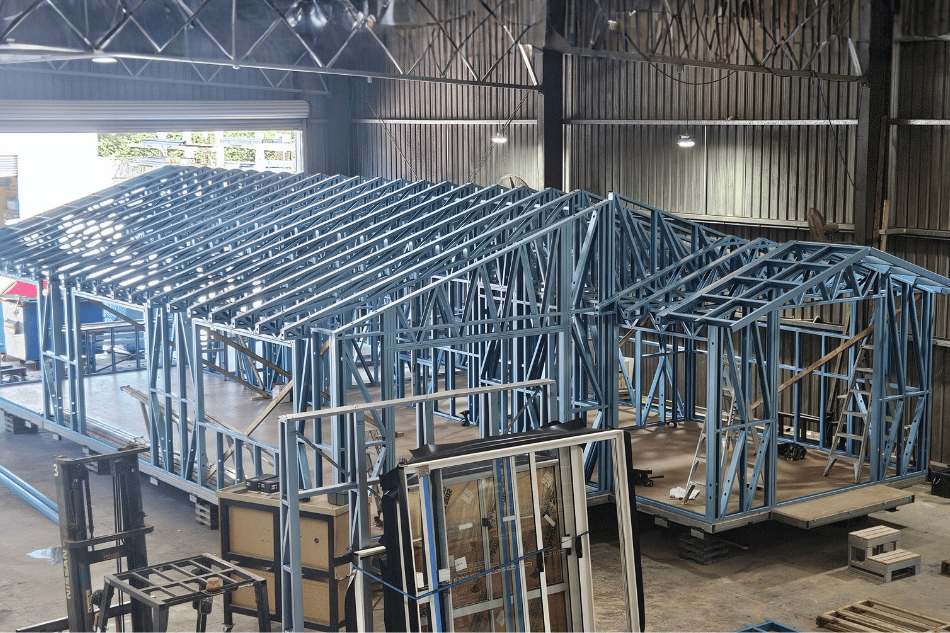
Now, let’s bring modular homes into the picture. The beauty of modular housing is the planning that happens upfront. Every detail is considered during the design and construction process in the factory—right down to your power source.
If you know you’re going solar, we’ll make a few smart adjustments during the build stage—like configuring your mater box to accommodate solar connections. These tweaks don’t cost the earth and can save time, effort, and cash when your home is delivered to site and ready for final hook-up.
It’s a subtle difference, but it’s the kind of foresight that makes a big impact later on.
In fact, we’ve seen more than a few Australian family couples who are smart about their investment treat this as a small insurance policy—knowing their home is future-proofed, whether they go solar now or in a few years.
Planning Ahead, With Eyes Wide Open
Whether you’re building in a high country block, on the edge of the coast, or deep in the bush, power is a big deal. And it’s not just about keeping the lights on—it’s about creating a home that can support your lifestyle, your family, and your future.
For some families, solar and battery storage is absolutely the right move. For others, it’s something to watch, wait, and weigh up over time. The good news is, with the right information and a bit of forward planning, your home can be designed to flex with whatever energy path you choose—now or down the line.
At Manor Homes, we work with families who are building for the long haul. And when energy choices come into play, it’s about guiding you through the options—not pushing you one way or the other. Because building your home is about more than materials and finishes—it’s about building the story of how you’ll live in it, day to day.
Next Steps
If you’re considering solar power for your new modular home, start by looking at:
- The cost of grid connection at your site
- Your long-term energy usage and goals
- What rebates or incentives apply in your state
- Whether you’re building somewhere that needs backup power solutions
- How future-ready your home will be if you’re not going solar right away
And remember: you don’t need to have all the answers up front. Sometimes just asking the right questions early on can make all the difference later.