


Steel frame homes aren’t new, but they still raise questions for many Australian home buyers.
That makes sense.
Timber has been the familiar choice for generations. In many parts of Australia, it still dominates the residential framing market. As one example, recent Victorian framing data showed timber made up most approved house frames, while steel was still a much smaller share of the market.
So when people ask questions about steel, they’re not being difficult.
They’re doing what smart home buyers should do.
They’re checking the facts before making a major decision.
The truth is simple: timber isn’t wrong, and steel isn’t a magic answer to everything. Both can work when they’re designed, detailed and built properly.
But many common fears about steel frame homes come from unfamiliarity, outdated assumptions, or not understanding how modern residential steel framing works.
For Australian family couples who are smart about their investment in their family home, the goal isn’t to choose the most familiar option. It’s to understand the options clearly.
Steel vs timber isn’t a right-or-wrong argument
Before looking at the concerns, it’s worth getting one thing clear.
This isn’t a “steel good, timber bad” discussion.
Timber can build excellent homes. Steel can build excellent homes.
The question is whether the framing system suits the home, the site, the builder’s process and the long-term result the customer wants.
Manor’s existing article on steel frame vs timber frame homes explains the comparison in more detail. The short version is that timber is familiar and widely used, while steel brings advantages around consistency, termite resistance and a highly engineered approach.
The frame matters.
But the full system matters more.
That includes engineering, insulation, moisture control, corrosion protection, cladding, fixings, windows, ventilation, workmanship and the builder’s process.
Concern 1: Will a steel frame rust?
Modern residential steel framing is made from coated steel designed for building use. For example, BlueScope describes TRUECORE steel as designed for structural framing and supported by corrosion-performance testing.
It’s not bare steel sitting inside the wall cavity waiting to rust.
BlueScope’s TRUECORE warranty information says a warranty of up to 50 years may be available for eligible house-frame applications.
That matters because corrosion protection isn’t an afterthought. It’s part of the steel framing system.
The real issue is not whether steel can corrode in theory. It can.
The real issue is whether the right steel product has been specified, detailed and installed for the environment.
Timber needs protection from moisture and termites.
Steel needs the right coating, separation from incompatible materials and proper detailing in corrosive environments.
So the rust concern isn’t silly, but the common fear is overstated.
A properly specified steel frame in a properly built home is not expected to rust simply because it’s made from steel.
The better question to ask your builder is: what steel product do you use, and how is it protected for the site conditions?
Concern 2: Are steel frames strong enough?
Yes.
A residential steel frame has to comply with the National Construction Code and relevant standards, just like a timber frame does.
It doesn’t get a free pass because it’s a different material.
Steel framing used in Australian homes is part of a regulated building system. The frame has to be designed and built to meet the required structural performance. NASH standards for steel-framed housing include residential and low-rise steel framing design criteria and design solutions.
So the frame still has to do its job.
It must deal with loads, bracing, wind classification, serviceability and durability.
Light gauge steel can sound “light”, but light doesn’t mean weak.
It means the material is engineered to do a structural job without unnecessary bulk.
One of steel’s advantages is consistency. It doesn’t shrink, twist or warp in the same way timber can when moisture and temperature change.
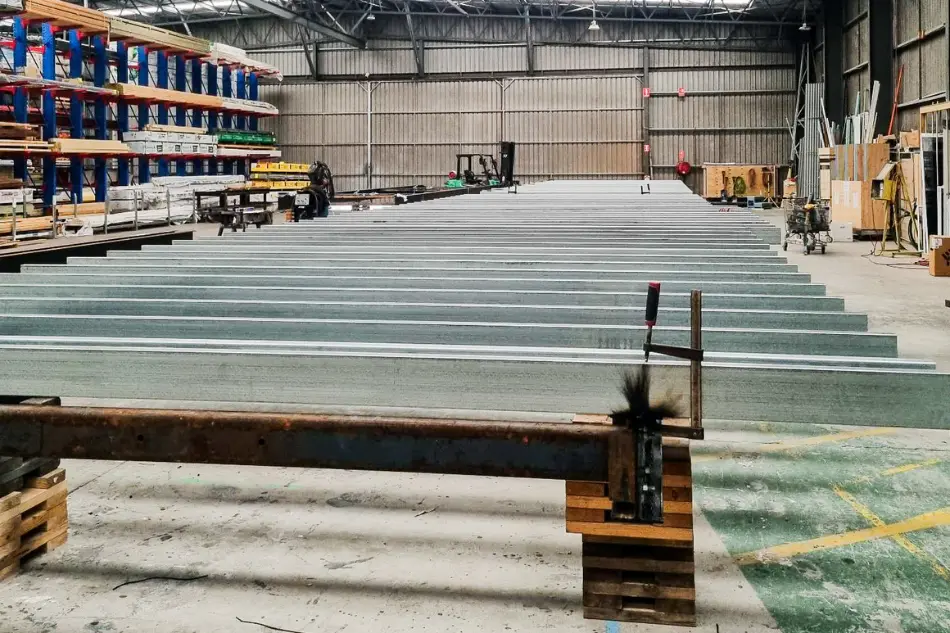
Manor’s article on internal steel wall frames explains how computer-guided steel framing helps create straight, accurate frames as part of a controlled building process.
The question isn’t whether steel feels familiar.
The question is whether the frame has been properly engineered and built as part of a complete system.
Concern 3: Can I hang pictures and shelves on steel-framed walls?
Yes, you can hang pictures and shelves in a steel-framed home.
This is one of the most practical concerns people raise, and it’s easy to understand.
People want to know whether they’ll still be able to live normally in the home.
For most light picture hanging, fixings often go into the plasterboard rather than the frame itself.
For heavier items, the fixing method matters. That’s true in timber-framed homes too.
Shelves, televisions, heavy mirrors, cabinetry and wall-mounted items need the right fasteners, backing or fixing points.
Enduroframe’s steel framing myth guide makes the same point: ordinary picture hanging is generally handled through standard plasterboard fixing methods, while heavier loads need the right fasteners and support.
Steel doesn’t stop you from hanging things.
It simply means you use the right fixing method for the weight and location.
That’s not a major drawback.
It’s normal building practice.
Concern 4: Are steel frame homes noisy?
A properly built steel frame home shouldn’t be noisy just because it has a steel frame.
Noise performance comes from the whole wall, floor and roof system.
That includes insulation, plasterboard, linings, fixings, windows, doors, seals, gaps and workmanship.
Enduroframe refers to CSIRO research showing most occupants of steel-framed homes either reported no sound from the frame or said it wasn’t a problem.
The important point is this: if a home is noisy, the frame material may not be the main issue.
The total building system matters more.
The same applies to thermal comfort.
Steel conducts heat more than timber, so insulation and thermal bridging need to be handled properly. The Australian Government’s YourHome construction systems guide notes that steel framing must be appropriately insulated or it can act as a thermal bridge and increase condensation risk.
That doesn’t make steel unsuitable.
It means the home needs to be designed and built by people who understand the system.
The frame doesn’t perform on its own.
It performs as part of the home.
Concern 5: Are steel frames more expensive?
Steel isn’t automatically cheaper, and it isn’t automatically dearer.
The cost depends on the builder’s system, the design, the supply chain, the site and what’s included.
If a builder is set up for timber and rarely uses steel, steel may cost more in that system.
If a builder has the right steel framing process, equipment, supply chain and team, steel can be very efficient.
That’s why comparing only the raw material cost can be misleading.
The better comparison is the full building system.
- Does the frame improve accuracy?
- Does it reduce waste?
- Does it reduce movement?
- Does it support a more controlled build process?
- Does it suit the way the home is being manufactured or constructed?
Those questions matter more than asking whether one material is always cheaper than the other.
Other steel frame questions people ask
There are a few other questions that come up.
Does steel affect Wi-Fi?
In a normal home, Wi-Fi performance is usually affected more by router position, wall linings, insulation, appliances, distance and layout than by the frame alone.
Is steel electrically safe?
Yes, when designed and installed properly. A steel-framed home still has to comply with electrical and building requirements. If earthing or bonding is required, that’s part of the compliance process.
Is steel sustainable?
Steel has high embodied energy, but it’s also highly recyclable. Timber can be renewable and stores carbon while it grows. YourHome’s lightweight framing guide gives a balanced overview of timber and steel lightweight framing, including benefits and limitations of both.
The better question is how the whole home performs over time.
Can steel-framed homes be changed later?
Yes, but structural changes need proper advice. You shouldn’t cut, remove or alter structural members without checking first, whether the frame is steel or timber.
The bigger truth: the frame is only part of the home
Steel isn’t magic.
Timber isn’t outdated.
The quality comes from the full building system.
A good home depends on engineering, frame specification, corrosion protection, insulation, moisture control, cladding, glazing, ventilation, fixings, workmanship and the builder’s process.
That’s why steel frame homes shouldn’t be assessed on one fear or one benefit alone.
The right question isn’t: is steel better than timber?
The better question is: does this builder understand the system they’re using, and can they explain why it suits the home?
Questions to ask your builder
If you’re considering a steel-framed home, ask clear questions.
- Why do you use steel instead of timber?
- What steel product or specification do you use?
- Is the frame made from BlueScope or another recognised steel product?
- What warranty applies to the steel framing?
- How do you manage corrosion risk?
- How does the frame comply with the building requirements?
- How do you manage insulation and thermal bridging?
- How do I hang heavier items on walls?
- Is steel more expensive in your building system?
- Can I see homes you’ve built with steel frames?
- What parts of the home are steel framed?
These questions will give you a far better answer than simply asking whether steel is “good” or “bad”.
So, should you be worried about steel frame homes?
No, not if the steel frame is properly specified, engineered and built by a builder who understands the system.
But yes, you should ask questions.
That’s sensible.
Some concerns about steel are myths.
Some have a small element of truth.
And some are really questions about whether the builder knows how to design and build with steel properly.
That’s the real issue.
Steel frames have been used in Australian homes for decades. They meet building requirements. They’re engineered for residential construction. And when used properly, they can support a strong, straight, durable and predictable build.
For Australian family couples who are smart about their investment in their family home, the goal isn’t to choose a frame because it’s familiar.
The goal is to choose a building system that makes sense for the home, the site and the long-term result.