

Concrete Slab vs Pier Foundations: Which One’s Right for Your New Home?
Building a new home? One of the biggest decisions you’ll make is what goes under it—a concrete slab or pier foundations. But it’s not just about the foundation. A concrete slab includes the floor of your home, while a pier foundation supports a suspended floor system, often made of timber or steel. So, which one’s better for your block?
Let’s break it down in simple terms.
What’s a Concrete Slab?
A concrete slab does double duty—it’s both your foundation and your floor. Poured directly onto the ground, a slab provides a solid base for your home and serves as the floor you’ll walk on. It’s a popular choice for flat blocks of land and modern homes.
Why Choose a Slab?
When your place needs more than a lick of paint, should you renovate or start from scratch? Here’s the thing:
- Foundation and Floor in One: With a slab, you don’t need a separate flooring system—it’s all in one, which can simplify the build and save time.
- Flat and Level Finish: A slab gives you a smooth, even floor from the start. Perfect for a clean, modern look.
- Great for Flat Land: If your block is flat and stable, a concrete slab can be a fast and efficient option.
- Energy Efficiency: Slabs are great for trapping heat in winter and keeping your home cool in summer.
- Ideal for Outdoor Living: Concrete slabs make it easy to connect seamlessly with outdoor spaces like decks and verandahs.
But there’s a catch: if your land has moveable soil, things get expensive. You’ll need to stabilise the ground before you pour the slab, which can add big costs to your project.
What’s a Pier Foundation?
Unlike a slab, a pier foundation is just that—the foundation. Your home is lifted off the ground by vertical posts (piers), which support a suspended flooring system, usually made of timber or steel. This is the norm for modular homes and homes built on sloping or uneven land.
Why Go with Piers and a Suspended Floor?
A knockdown rebuild isn’t all sunshine and rainbows. You need to know what you’re getting into:
- Separate Foundation and Floor System: With piers, your foundation holds up a suspended floor, often made of timber or steel, which sits above the ground.
- Faster for Modular Homes: Piers are the go-to for modular homes because they’re quick to install, especially on tricky blocks.
- Handles Slopes Like a Pro: If your block isn’t flat, piers adapt easily to uneven ground without needing expensive site prep.
- Cost-Effective on Challenging Sites: Pier foundations are usually cheaper than stabilising the land for a slab, particularly if your soil’s unstable.
- Better Airflow and Insulation: Lifting the home off the ground gives you better ventilation underneath and reduces moisture build-up.
- Great for That Classic Look: Piers and suspended floors work beautifully with decking and verandahs, giving your home that raised, classic Australian look.
What’s the Cost?
The cost of each option depends a lot on your land.
- Concrete Slab: Since a slab is both the foundation and the floor, it’s cost-effective if your land is flat and stable. But if you’ve got moveable soil, stabilising the ground can seriously increase your costs.
- Pier Foundation with Suspended Floor: Piers and a suspended floor are often more affordable for sloping or uneven blocks, and for blocks with substantial rock on the site. For modular homes, they’re quicker and cheaper to install because they don’t need as much site preparation.
How Long Will It Take?
So, what’s the process? Here’s the basic rundown:
- Concrete Slab: On flat, stable land, a slab can be poured pretty quickly. But if the ground needs stabilising, that can slow things down.
- Pier Foundation with Suspended Floor: Piers are generally quicker, especially for modular homes. Since you don’t need to level the ground like you do with a slab, the build moves faster. Once the piers are in, the timber or steel floor system goes up quickly.
Which One’s More Durable?
Both systems are built to last, but they react differently to the land beneath them.
- Concrete Slab: Slabs are tough, but if the soil shifts, cracks can appear. Fixing a cracked slab can be expensive and time-consuming.
- Pier Foundation with Suspended Floor: Piers are more flexible, meaning they can handle a bit of movement in the soil. If there’s a problem, it’s easier to access the suspended floor system for repairs.
What About Your Land?
Your block of land plays a big role in deciding which system works best.
- Concrete Slab: Slabs are great for flat, stable land. But if your soil is moveable, stabilising the ground can add hefty costs to your project.
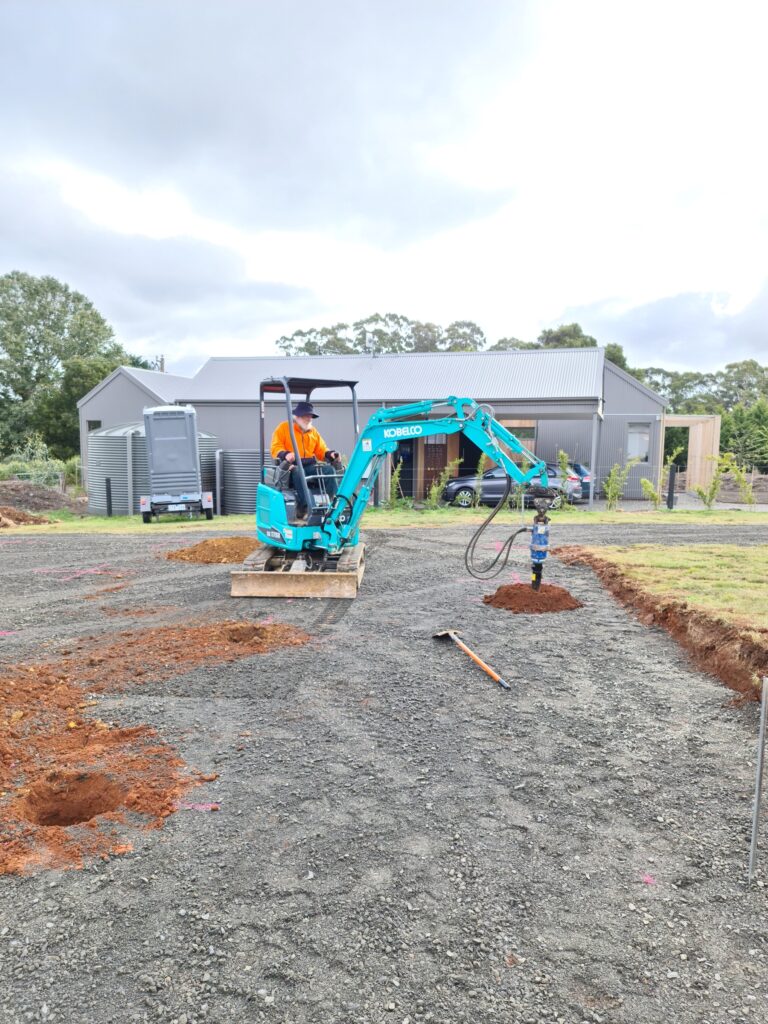
- Pier Foundation with Suspended Floor: If your block is sloped or the soil is soft, piers are the way to go. They adapt to the land and don’t need the extensive preparation that slabs do. This is why they’re common for modular homes—they’re fast, flexible, and efficient on tricky ground.
Does Weather Play a Part?
Yes, weather can influence your choice.
- Concrete Slab: In areas with heavy rain, slabs can help keep moisture out of your home. Just make sure you’ve got good drainage to avoid water pooling around the foundation.
- Pier Foundation with Suspended Floor: If you’re in a flood-prone area, piers are the better option. They raise your home off the ground, protecting it from water damage. You can check if your land is in a flood-risk zone by visiting the NSW Flood Data Portal.
How Will It Look?
Yes, weather can influence your choice.
- Concrete Slab: A slab gives your home a lower profile, making it look more grounded and modern. It’s great for easy access and a clean, contemporary style.
- Pier Foundation with Suspended Floor: Piers give your home that raised, traditional look, with space underneath for airflow and ventilation. This setup works perfectly with timber verandahs and decking, giving your home a classic Aussie feel.
Which One’s Right for You?
At the end of the day, it comes down to your land, your budget, and the look you’re after.
- Concrete Slab are a great all-in-one solution for flat, stable land. But if you’ve got moveable soil, sloping sites or after a traditional or modular look, the costs of stabilising, leveling or elevating the ground can add up.
- Pier Foundation with Suspended Floor are faster and more affordable, especially for modular homes, and especially on sloping or tricky blocks. They’re flexible and can save you time and money on site prep, and generally end up with a better result.
Before you make your choice, it’s worth getting a professional home builder involved. They’ll help you decide which foundation will work best for your new home.