


You’ve probably heard the stories. A friend-of-a-friend who blew their budget by tens of thousands. Someone who had to sell the family car just to pay for extra drainage. Or the couple who kept getting hit with ‘unexpected’ costs long after signing their contract.
It’s no wonder many Australians approach building a new home with a certain amount of caution—and a big contingency fund.
But let’s be clear: the idea of having a contingency is not the problem. It’s how much you need to allow—and why—that really matters.
If someone’s telling you to set aside 10% or more just to feel safe, it’s worth asking: what’s going on behind the scenes?
Contingency 101: What Is It, and Why Do People Recommend One?
A contingency is a buffer. It’s that little extra you keep aside in your budget, just in case something unexpected pops up during your build. This might be minor changes in selections, a bit of landscaping, or something unpredictable like a storm delay.
Having a contingency is actually smart. But when people start suggesting 10% or more—on top of your entire build cost—that’s not just being cautious. That’s a sign something else is at play.
A realistic, well-prepared build shouldn’t need a contingency that high. If it does, it usually means the original quote wasn’t accurate to begin with.
Why Do People Say You Need a Huge Contingency?
Let’s be clear—most builders won’t outright tell you to add 10 or 15% to your budget “just in case.” But the reason so many Australians believe they need that kind of buffer is because of what they’ve seen and heard. From friends who went over budget, family members who faced nasty surprises mid-build, to news stories about building costs spiralling out of control—it all adds up to one big message: be prepared for the worst.
The thing is, these stories usually have one thing in common: they started with a builder who didn’t do enough homework upfront.
When builders offer quick, free quotes without doing proper site checks, without full engineering reports or bushfire assessments, and without locking in a detailed scope—they’re leaving too much open-ended. That’s when budgets blow out, stress levels rise, and homeowners start telling everyone they know: “make sure you have a big contingency.”
It’s not the builder saying it—it’s their past clients, trying to protect others from the same experience.
But it doesn’t have to be that way.
A Better Way: When the Process Does the Heavy Lifting
The builders who consistently stay on budget are the ones who follow a clear, proven process. They don’t rely on rough estimates. They rely on detail.
That means:
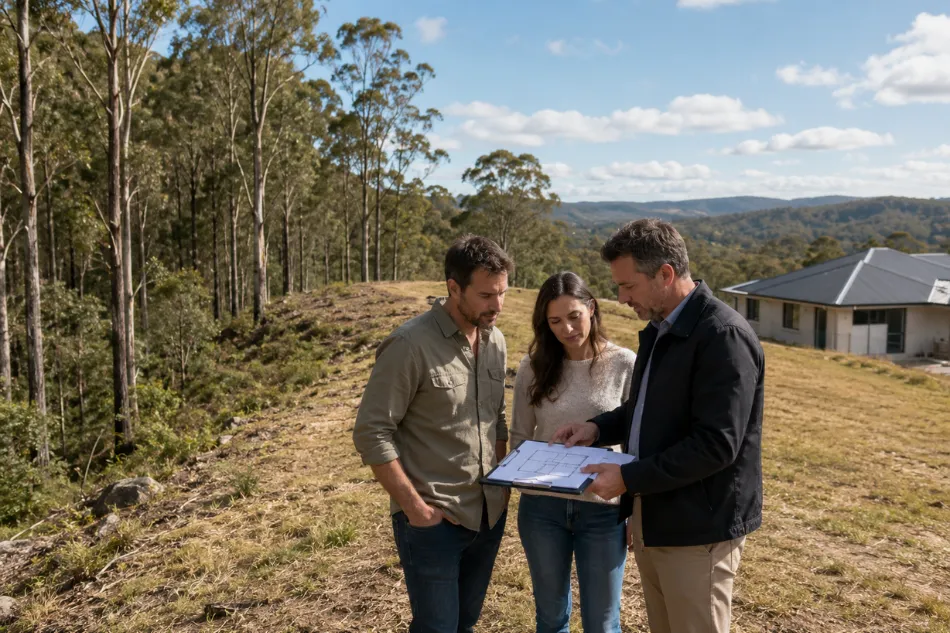
- Visiting your site and assessing the land conditions
- Completing all the relevant reports before quoting
- Finalising plans that are ready for construction, not just for show
- Providing transparent inclusions and exclusions—no guesswork
This level of upfront effort means fewer surprises later on. And that translates to a more realistic budget, tighter pricing, and a smaller contingency. It’s not magic. It’s just doing things properly.
We often see Australian family couples who are smart about their investment gravitate towards this kind of approach—those who value both style and long-term value in their home. They’re not just chasing the cheapest price; they’re prioritising peace of mind, smart design, and a journey without surprises.

So, What’s a Reasonable Contingency?
In a well-planned build, a 2–5% contingency is usually enough, depending on your exact situation, location and what you’re including in the build scope. That’s a few thousand dollars, not tens of thousands.
This kind of buffer gives you the flexibility to upgrade your kitchen taps or add a garden path, without breaking the bank. It’s not there to cover major structural issues—because those have already been dealt with during the planning and quoting phase.
In fact, a small contingency is a great sign. It shows your builder has done the work upfront and isn’t relying on you to carry the risk.
Four Questions to Ask Your Builder Before You Sign Anything
Want to avoid getting caught out? Ask these questions early:
- What reports have you completed before quoting?
- Have you reviewed my site in detail?
- What’s included in the price—and what’s not?
- How do you handle cost variations once we’re under contract?
If a builder can’t answer clearly, or gets cagey, that’s your signal to dig deeper.
A good builder won’t just be transparent—they’ll be proud to show you how their process works.
In the End, It’s About Confidence—Not Just Caution
You shouldn’t need to feel anxious about building your family home. And you shouldn’t have to stash away a massive contingency to protect yourself.
When a builder has a solid process, they’ve already done the hard work to make sure your quote is accurate and your journey is clear, and that happens through a contract that is comprehensive. That’s what allows you to move forward with confidence—not crossed fingers.
A contingency should be a safety net, not a stress point. When handled right, building your home becomes what it should be: a moment of joy, not a financial gamble.
Want to know more about planning smarter and building with confidence? Discover more practical tips here.