


You love the area.
The coastline. The community. The schools. Family nearby. The local cafe where they know your order.
The location still feels right.
The home doesn’t.
That’s a common problem across established coastal communities north of Sydney, from the Central Coast through Lake Macquarie and towards Newcastle. Many great blocks are occupied by older homes that are too small, poorly positioned, expensive to maintain or simply no longer suited to modern family life.
It’s easy to assume the only choices are to renovate or move.
There’s another option.
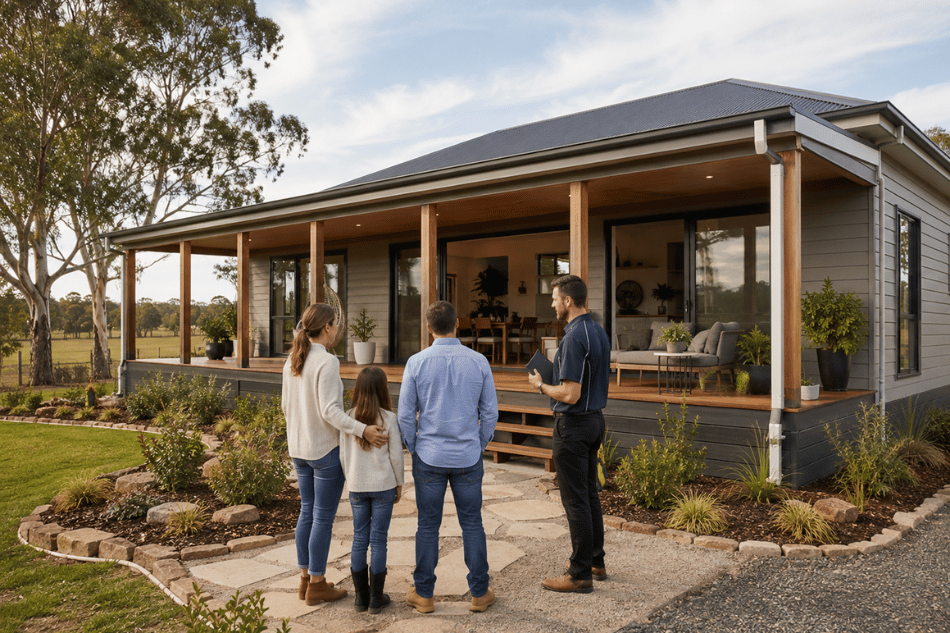
A knockdown rebuild lets you remove the old home and build one that makes better use of the location you already love.
The old home isn’t the whole property
When a house has been standing on a block for decades, it can feel permanent.
Almost untouchable.
Demolishing it may even feel wasteful. After all, it’s a complete house. Surely it must be worth saving?
Sometimes it is.
But sometimes the home is simply the least valuable part of the opportunity.
The real value may be the land. The position. The view. The trees. The proximity to the beach, family, work and services. The community you’re already part of.
You may already own the hardest thing to replace: a great location.
Just because an old home is sitting on the block doesn’t mean it has to determine how your family lives for the next 20 or 30 years.
As Manor’s guide to deciding whether a knockdown rebuild is right for you explains, rebuilding can let you keep the land and lifestyle you value while creating a home that better suits your future.
Demolition isn’t always waste
A demolition cost can look confronting when it’s viewed on its own.
You’re spending money to remove something rather than create something. On the surface, that can feel backwards.
But that’s not the full picture.
Demolition may simply be part of the cost of building the right home in a location where suitable vacant land is difficult to find.
The same thinking applies to removing rock, improving access or upgrading services. They’re enabling costs. They make the final result possible.
Smart homeowners don’t judge a knockdown rebuild by the demolition invoice alone.
They look at the whole project:
- What will the completed property be worth?
- What would it cost to buy another suitable property nearby?
- How much would a major renovation really cost?
- Would a renovation still leave compromises?
- How long does the family plan to stay?
- What ongoing maintenance will the old home need?
- What will selling, buying and moving cost?
Different question. Better decision.
Think in decades, not demolition day
A knockdown rebuild is rarely about getting the cheapest answer this year.
It’s about getting the right answer for the next stage of life.
A family may spend years trying to make an unsuitable house work. A room added here. A wall removed there. A kitchen moved. A deck extended.
But additions don’t always fix the underlying problems.
The home may still face the wrong direction. The living areas may still miss the view. Bedrooms may remain too small. Floor levels may be awkward. The building may continue to need repairs because much of the original structure is still old.
Renovation can be the right answer when the existing home has good bones and the right position.
But when the fundamentals are wrong, renovating may mean spending heavily to keep working around them.
Starting again creates a clean slate.
Right home. Right position. Right long-term outcome.
Will a knockdown rebuild over-capitalise the property?
It can. Any building project can.
A desirable location doesn’t remove the need to do the numbers.
But it can change the equation.
A new home on a strong block in an established coastal area may be better supported than the same home in a location with weaker demand or plentiful land.
That’s why the entire property needs to be considered – not simply the cost of the house and demolition.
The smart approach is to compare the complete project cost with:
- The likely value of the finished property
- Recent property sales in the surrounding area
- The cost of buying an equivalent home nearby
- The cost and risk of a substantial renovation
- The family’s expected holding period
It also means allowing for the full cost of buying elsewhere, including selling fees, legal costs, moving expenses and NSW transfer duty.
The point isn’t that knockdown rebuilds can’t over-capitalise.
They can.
The point is that demolishing an old home doesn’t automatically mean the money is being wasted. In the right location, with a sensible design and a well-managed budget, it may be the investment that unlocks the property’s real potential.
Good coastal locations can be difficult to replace
It’s easy to say, “We’ll just sell and find something better.”
Then the search starts.
- The right suburb, but the block’s too small.
- The right house, but it’s too far from family.
- Close to the water, but exposed to traffic.
- Good outlook, but poor access.
- Nice home, wrong community.
Buying elsewhere can solve one problem and create several new ones.
A great location is more than a postcode.
It’s the life around the home.
That has value too.
A new home can make the location feel completely different
Older homes weren’t always designed to make the most of their blocks.
- The best outlook may be behind a laundry wall.
- The living room may face away from the sun.
- The kitchen may be disconnected from the backyard.
- Outdoor space may feel like an afterthought.
A new home gives you the chance to respond properly to the site.
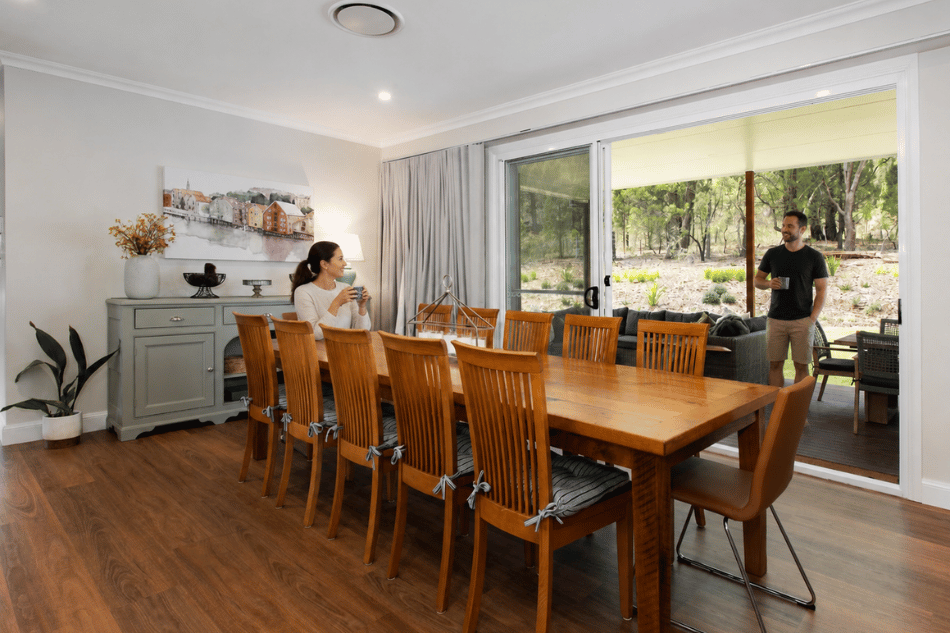
You can position living spaces around light and views. Improve indoor-outdoor flow. Create better privacy. Add practical storage. Design bedrooms that suit the family. Plan for children, visitors, working from home or easier living later in life.
For coastal regional families, this can mean creating a home that feels connected to its setting rather than merely sitting on the block.
Breezes considered. Views captured. Outdoor areas protected. Daily life made easier.
That’s also the thinking behind good modern coastal home design: natural light, easy indoor-outdoor movement and a home designed around the climate, land and lifestyle.
Why modular construction can suit a knockdown rebuild
A modular build can provide another practical advantage.
Because much of the new home is constructed off site, factory work may begin before the existing house is demolished. This can reduce the amount of time the block is empty and may shorten the period the family needs temporary accommodation.
Manor explains this in more detail in its guide to choosing a modular home for a knockdown rebuild.
It doesn’t remove the need for planning, demolition and site preparation.
But it can allow different parts of the project to be coordinated more efficiently.
For families wondering what actually happens before the new home arrives, Manor’s explanation of the modular-home demolition process also walks through approvals, asbestos checks, service disconnections, demolition and site preparation.
Do the homework before knocking anything down
The emotional case for rebuilding may be strong.
The practical case still needs to stack up.
Before committing, understand:
- Local planning and zoning controls
- Heritage or vegetation restrictions
- Flood and bushfire requirements
- Site access
- Slope and soil conditions
- Existing services
- Stormwater and drainage
- Demolition and asbestos costs
- Temporary accommodation
- Driveways, landscaping and external works
- The likely completed property value
The NSW Planning Portal’s knockdown-rebuild guidance is a useful starting point for understanding approvals, planning certificates and common site constraints.
Older homes may also require an asbestos assessment before demolition costs can be properly understood.
Manor’s home pricing guidance also explains why the house itself is only one part of the full project budget. Site conditions, approvals, inclusions and external works all matter.
Good decisions start with proper feasibility.
Not wishful thinking. Not a base price on a website. Not a quick comparison with the neighbour’s renovation.
The full picture.
Look beyond the house that’s there today
An old home can make a valuable property feel limited.
But the limitations of the house aren’t necessarily the limitations of the block.
That’s the opportunity.
For families who love their coastal location but have outgrown the home, a knockdown rebuild can offer something hard to achieve any other way:
A home designed for the future, in the place that already feels like home.
Our view is simple.
Don’t dismiss a great block because there’s an old house sitting on it.
Do the numbers. Understand the site. Think long term.
The home may be temporary.
The location could be worth holding onto.