


Understanding BAL Ratings: Your First Step to Bushfire-Resilient Living
If you’re building your dream home in Australia—especially on a bush block or rural acreage—you’ve likely come across the term BAL ratings. That’s your Bushfire Attack Level, and it determines how much fire protection your new home needs based on the surrounding landscape.
Here’s what most people don’t realise: BAL-40 is rare. Most residential areas—especially suburban and metro builds are classified much lower, often sitting around BAL-LOW or BAL-12.5. Even BAL-19 is considered moderately high. But BAL-40? That’s usually reserved for only a handful of homes, typically located near dense bushland or forested areas, where the risk is dramatically higher.
In other words, you’re not likely to end up with a BAL-40 site unless you’re building in a truly fire-prone environment, and if you are, it’s not something to take lightly. Not only is compliance tougher, but your local shire won’t approve your build unless you can prove your home meets every safety requirement.
That’s why we’ve pulled together this guide—not to overwhelm you, but to help you cut through the confusion. If you do find yourself needing to build to BAL-40 standards, this will walk you through what’s required, why it matters, and how to do it without losing your design vision or blowing your budget.
Step 1: Get Your BAL Assessment First
BAL-40 means the location of where you’re putting your home on the block is exposed to very high risk of potential ember attack. Most properties don’t reach this classification but if yours does, compliance isn’t just a smart idea, it’s the only way forward.
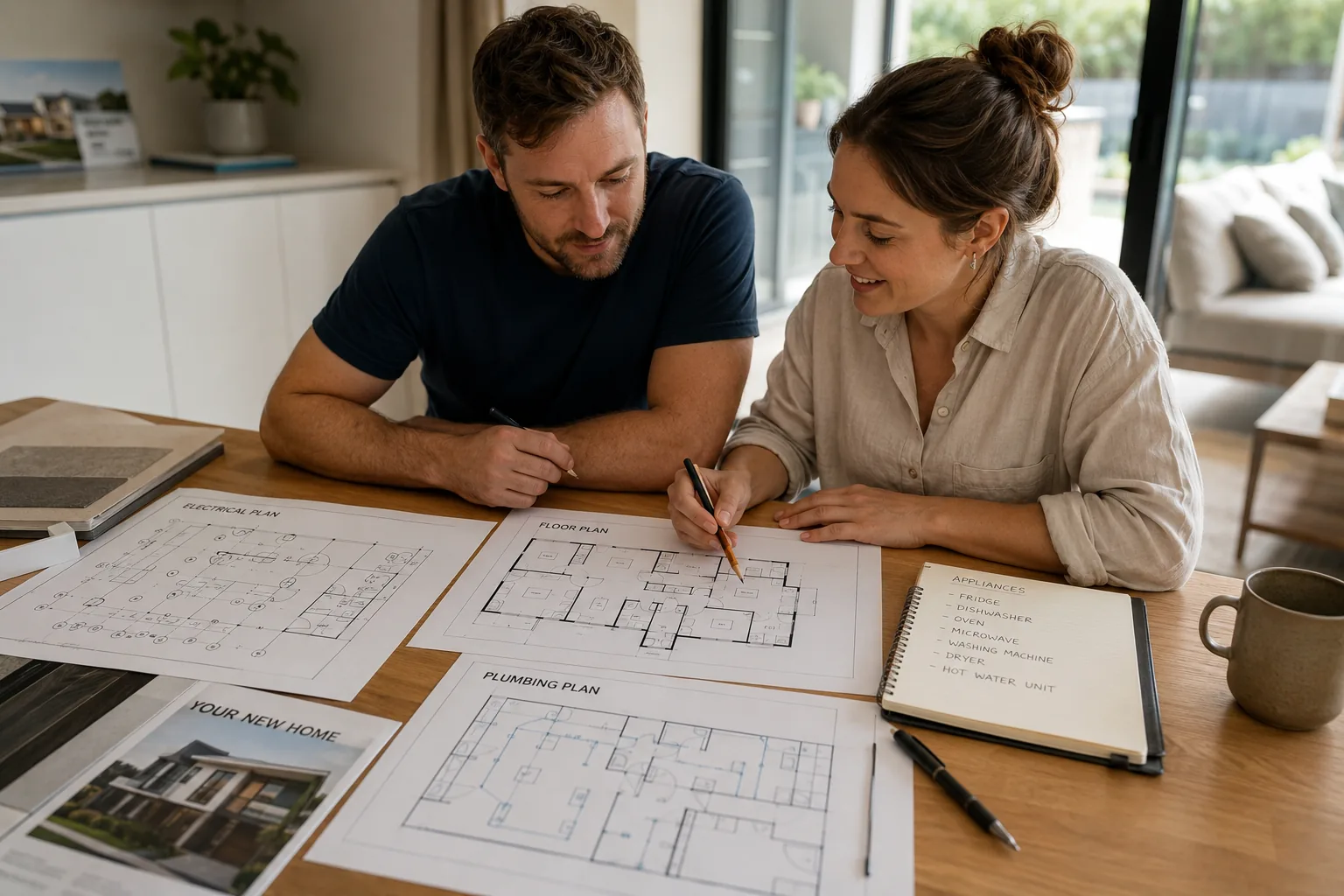
So before anything else, you’ll need a Bushfire Attack Level (BAL) assessment. This is usually done by a qualified consultant or surveyor, and it’s a mandatory step before you can even submit your building plans for approval.
Smart Australian family couples often make this their first step—knowing it sets the foundation for every other decision. A proper assessment helps avoid costly changes later.
Step 2: Choose Fire-Resistant Building Materials
To withstand intense heat, your home needs to be built with the right materials. BAL-40 regulations require non-combustible or certified fire-resistant materials for key areas of the structure.
External walls should be made from materials like:
- Brick or concrete block
- Fibre cement sheeting
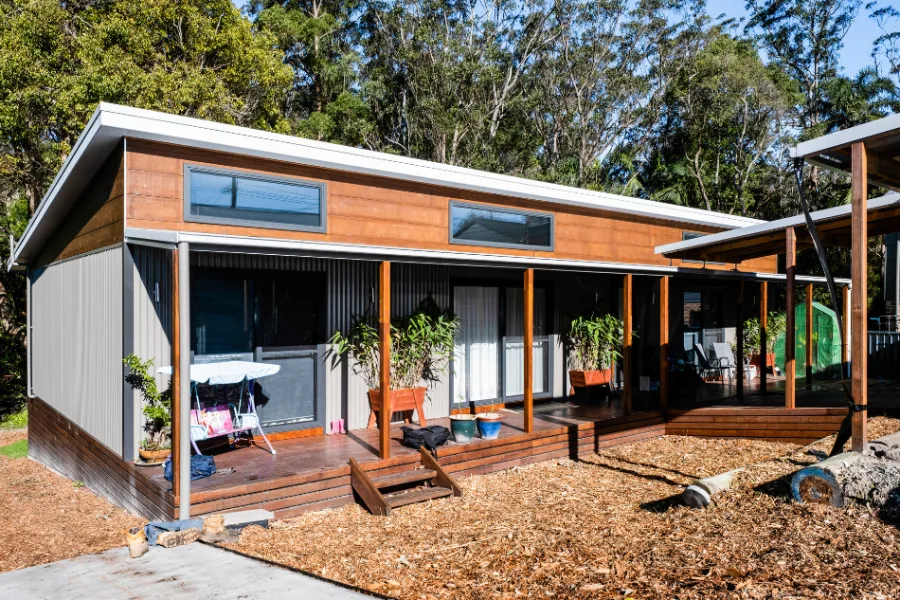
- Steel-framed and clad systems, which offer excellent fire resilience and structural durability
These materials are more than just protective—they’re durable, low-maintenance, and available in stylish finishes that blend with natural landscapes. Some modern cladding systems even replicate the look of timber while meeting BAL-40 standards.
Step 3: Reinforce Windows and Doors
Windows and doors are especially vulnerable in a bushfire. Under BAL-40, you’ll need to upgrade to tougher, more resilient systems that can resist heat and ember entry.
Here’s what to look for:
- Toughened safety glass for all glazing
- Metal window and door frames (aluminium or steel)
- Fine steel or bronze mesh screens (2 mm aperture or smaller)
- Solid-core doors fitted with fire-rated seals
- Shutters for large glazed areas or added protection
These upgrades don’t just meet compliance—they add thermal efficiency and a premium finish to your home. It’s one area where smart design and safety go hand in hand.
Step 4: Build a Bushfire-Resistant Roof
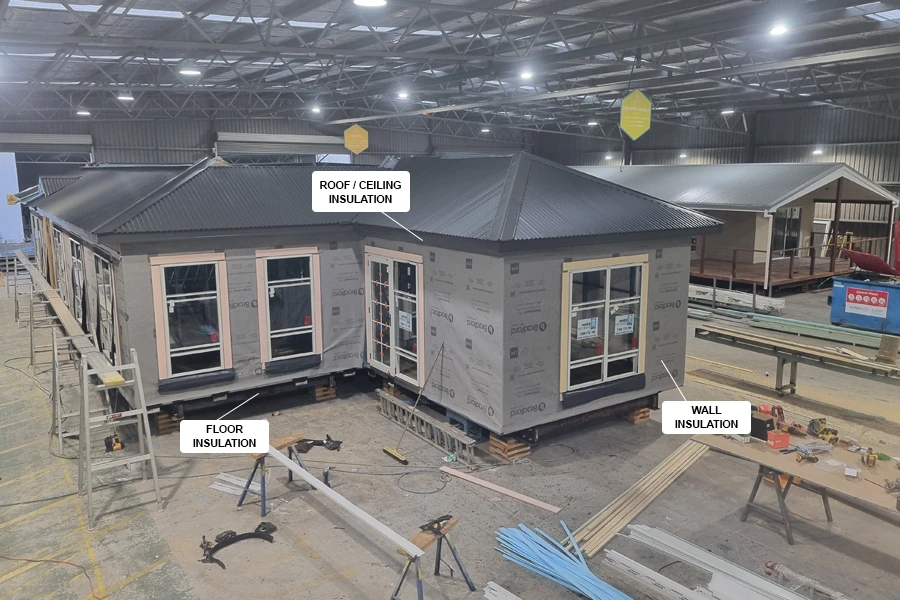
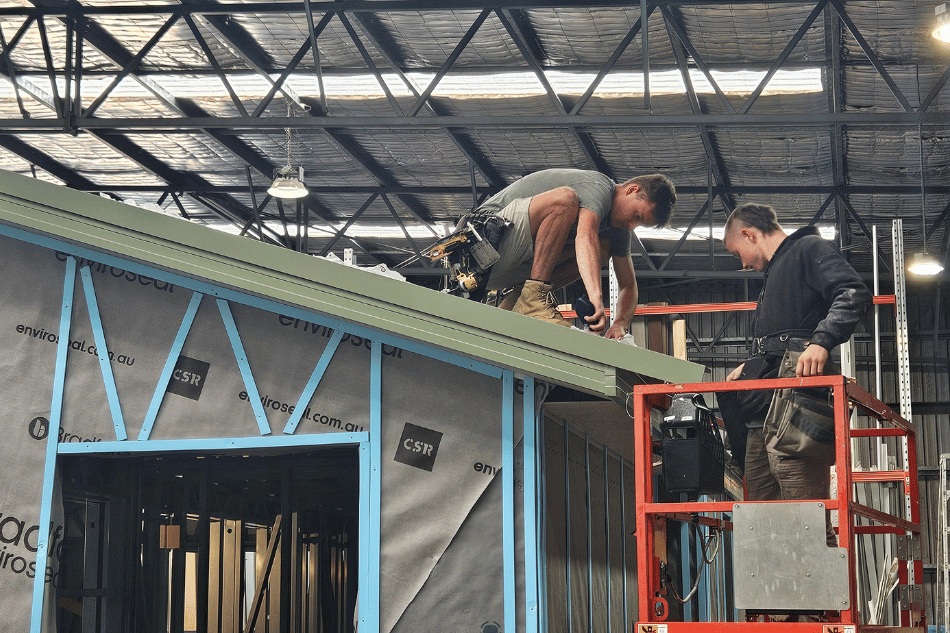
Your roof is one of the most vulnerable areas of your home in a bushfire, so getting the design and materials right is critical. To comply with BAL-40, the roof must be constructed from non-combustible materials, such as steel sheeting or concrete tiles, and installed to prevent any gaps where embers might enter. Beneath the roof covering, roof sarking—a fire-resistant lining—adds another layer of protection. You’ll also need metal mesh gutter guards to stop debris from accumulating and catching fire, and closed eaves and roof valleys to seal off access points. Opting for a simpler roofline with fewer junctions not only enhances safety but also improves energy efficiency and ease of maintenance.
Step 5: Don’t Overlook Small Openings
It’s easy to focus on big-ticket items, but fire risk can come from the smallest of spaces. BAL-40 compliance requires all openings—vents, weepholes, gaps around pipes and cables—to be tightly sealed or screened.
What you’ll need:
- Metal mesh covers on all vents (2 mm or less)
- Fire-resistant seals for wall penetrations
- Enclosed subfloors and garages where needed
These tiny upgrades make a huge difference and are easy to factor in during the design stage.
Step 6: Build with the Right Team
Getting BAL-40 compliance right isn’t just about choosing the correct materials—it’s about working with a builder who knows the regulations inside out and has real experience delivering homes in high-risk zones. Not every builder is up to the task, and this is where choosing the right team makes all the difference.
You want a builder who offers clear advice, uses tested systems, and ideally provides a fixed-price contract so you’re not hit with unexpected costs. Manor Homes has helped many families through this journey, in one notable case study, a family who tragically lost their home in a bushfire was able to rebuild with the right BAL rating—restoring not just their home, but their sense of security. With the right builder, the journey from assessment to approval to delivery can be smooth, supportive, and future-proof.
Build Smart, Live Safe
Meeting BAL-40 standards might seem like a challenge at first, but it’s just a matter of smart planning, smart design, and smart people. Many savvy Australian couples have already done it—building homes that are safe, beautiful, and perfectly suited to life in bushfire-prone areas.
By focusing on these key tips, you can protect your investment, your lifestyle, and most importantly, your family—without compromising on the home you’ve always wanted.