


The River Series is now available with our new Modern Coastal façade – designed for flood-prone and coastal blocks. | Enquire Now
We Know Why You’d Want to Supply Your Own
We hear it often—and we completely understand.
You’ve spotted a beautiful tap online at a great price. Maybe you’ve already picked out the pendant lights you’d love above the kitchen island. Or perhaps there’s a clawfoot bath passed down from your grandfather’s old home that holds sentimental value.
Supplying your own fixtures can feel like a way to save money, add personal character, or include something unique that’s meaningful to your story. Sometimes it’s simply because you’re not sure we can access the item you have in mind.
These are all familiar reasons, and they come from a place of care and intention. You want your home to feel right. And so do we.
That’s why we take a thoughtful approach when it comes to fixtures and finishes. It’s not about saying no—it’s about offering a better way to achieve the outcome you’re after: a home that feels truly yours, delivered with fewer delays, more clarity, and lasting quality.
The Little Things Can Derail Big Plans
It might seem like a small thing—swapping in a tile you love or using a tap you’ve already picked out—but even the most well-meaning change can create ripple effects. The process of bringing a home together is highly coordinated. Materials need to arrive in full, at the right time, and ready for the trade to install—often weeks after decisions are finalised.
When something doesn’t match, arrives damaged, or turns out to be incompatible, it’s not just the schedule that takes a hit. It can create confusion between suppliers and trades, frustration for the client, and extra back-and-forth that disrupts trust on all sides.
We’ve seen cases where a box of tiles turns out to be the wrong batch, or a client-supplied fitting doesn’t comply with what’s needed—and what began as a small idea ends up costing thousands of dollars in rework, delays, or substitute materials.
That’s why many Australian family couples who are smart about their investment in their family home choose to work within a process that reduces these risks from the start. It’s not just about convenience—it’s about protecting the relationships, clarity, and confidence that carry you through the home journey.
For helpful advice on avoiding these kinds of pitfalls, check out what to consider when choosing fixtures and fittings.
Who’s Responsible If Something Goes Wrong?
Here’s something most people don’t see coming: when the builder supplies the materials, they’re covered—plain and simple. If anything’s missing, faulty, or not quite right, it’s sorted quickly, with no extra stress on you.
But when items are brought in from outside, the waters get murky. If something doesn’t fit, arrives damaged, or just isn’t suited to the home, the responsibility often shifts—and it’s usually the homeowner left to figure it out.
Often, the appeal of sourcing your own fixtures is about saving money. But what can be overlooked are the added handling costs, higher labour fees for unfamiliar items, and delays that ripple through the schedule. In reality, DIY doesn’t always save you money—in fact, it can end up costing more once all the soft costs are factored in.
This isn’t about shifting blame—it’s about creating a clearer, smoother journey with fewer surprises and better outcomes for everyone involved.
Personal Choice Still Matters
Just because certain items can’t be supplied by the client doesn’t mean you’re stuck with a one-size-fits-all home. Most building processes—including ours—are designed with key decision points where you choose finishes, colours, layouts, and features that reflect your lifestyle and taste.
These structured design sessions are where the personalisation happens. And for most people, that’s more than enough to make the home truly theirs. You’re still choosing the style, just from within a set of options that are already proven to work well within your home.
And if there’s something specific you love, it’s always worth mentioning it early. In some cases, builders can source it through their own networks, ensuring it still fits within the project’s quality and installation standards.
Just like many Australian couples who take a practical, thoughtful approach to building, you’ll likely find that working within the builder’s process leads to a better result in both style and value.
We Could Get It Too—But There’s Often a Good Reason We Don’t
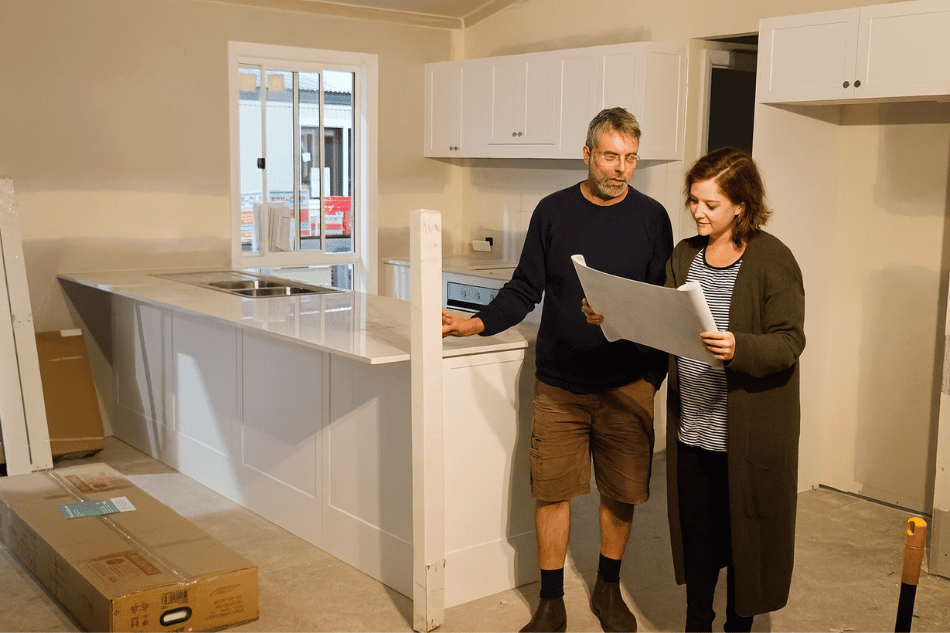
Often when someone brings us an item they’d like to include, we’ll say, “Yep, we can get that.” And if we can, and it makes sense for the home, we’re more than happy to source it.
But there are also times when we take a closer look and say, “We can get it—but we shouldn’t.” Not because it’s unavailable, but because it may not stack up to the standards we build to. Maybe it’s tricky to install. Maybe it’s a one-off that can’t be replaced. Or maybe it just doesn’t work with the rest of the systems in the home. Understanding how various construction systems interact behind the walls can also shed light on why consistency and compatibility are so critical in a well-resolved home design.
It’s never about shutting down ideas—it’s about protecting the experience. If we’ve chosen not to use something, there’s usually a solid reason behind it. Our goal is to help you create a home that’s not just stylish, but strong, consistent and well put-together from end to end.
And sometimes, saying no to a fixture means saying yes to fewer delays, fewer surprises, and a smoother path to the home you’ve imagined.
A Smoother Path to a Home That Feels Right
Most families aren’t looking to oversee every moving part—they’re simply after a home that reflects their lifestyle, comes together without unnecessary friction, and stands strong for years to come. That’s why the way materials are chosen, ordered, and installed isn’t left to chance. It’s a carefully considered path designed to reduce stress and deliver consistency, from the first decision to the final finish.
We’ve seen time and again how Australian couples who value both style and smart decision-making are drawn to this approach. Not because they’re compromising on individuality—but because they know that peace of mind is just as valuable as great design.
Wrapping It Up
At the end of the day, building a home is full of choices. Some feel personal, some feel practical—and often, the best decisions are the ones that strike a balance between both.
Supplying your own fixtures might seem like a small way to personalise your home, but it can open the door to bigger complications. That’s why so many builders ask clients to stick with approved ranges and suppliers. It helps keep your project on track, your budget intact, and your experience as straightforward as it should be.
And if the goal is a home that reflects your style, supports your lifestyle, and stands strong for years to come, then the smartest choices might just be the simplest ones.
Want your home to feel uniquely yours—without the drama?
See how a clear, guided design journey can help you focus on what really matters: creating a space your family will love. Take a look at how it all comes together.